SubstackNewsletter of Illustration & MythSubscribe
PetraCor
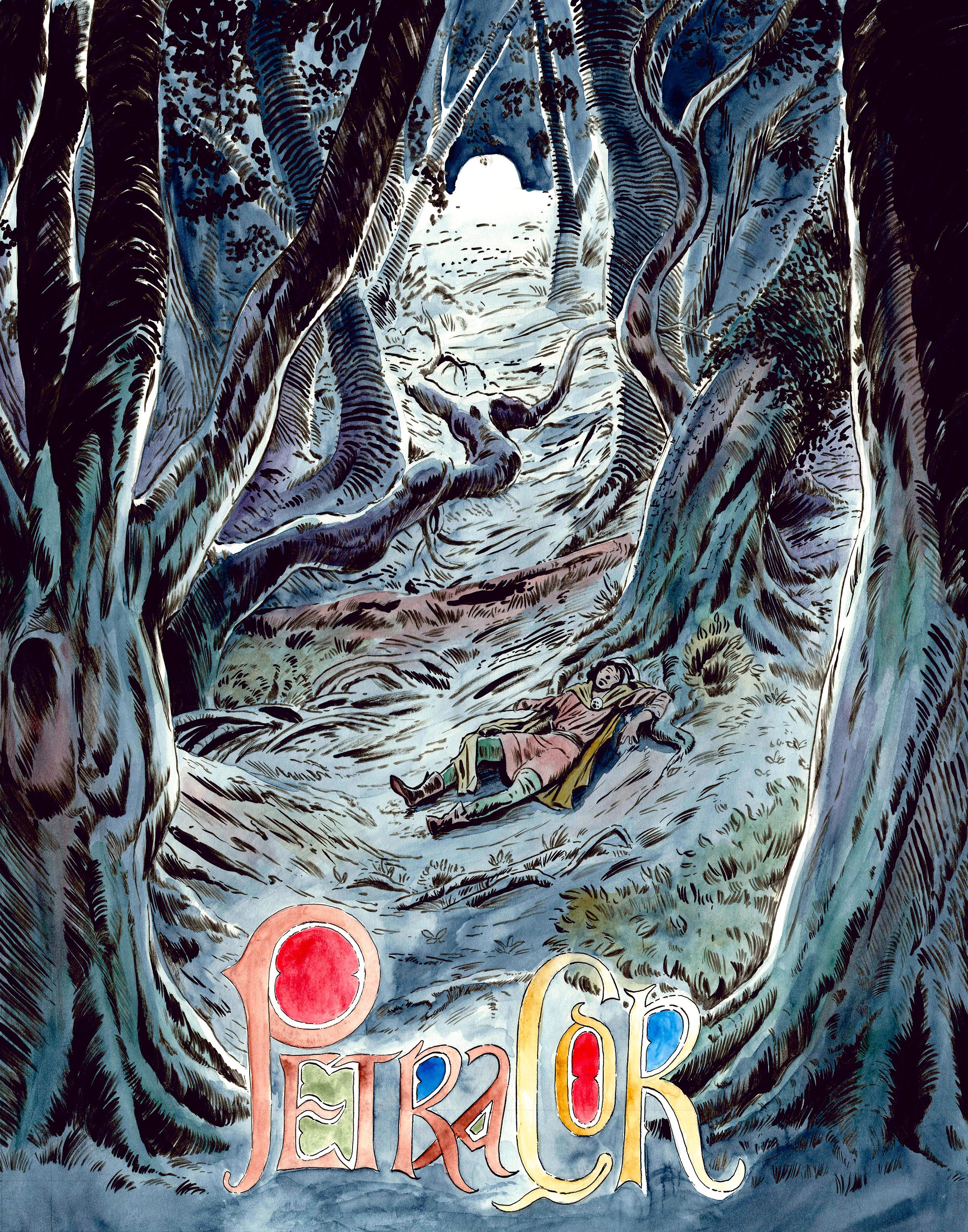
A heart of stone becomes a heart of flesh. The first pieces of a new project.
Read hereClose
In 793AD, Vikings raided the coast of England, landing on the island of Lindisfarne where an abbey overlooked the sea.
That event is held in the English memory as a day of wrath.
But the world of 8th century England was already layers of a Celtic world conquered by Romans, a Roman world conquered by Anglo-Saxons. My new graphic novel, PetraCor, takes place on those layers.
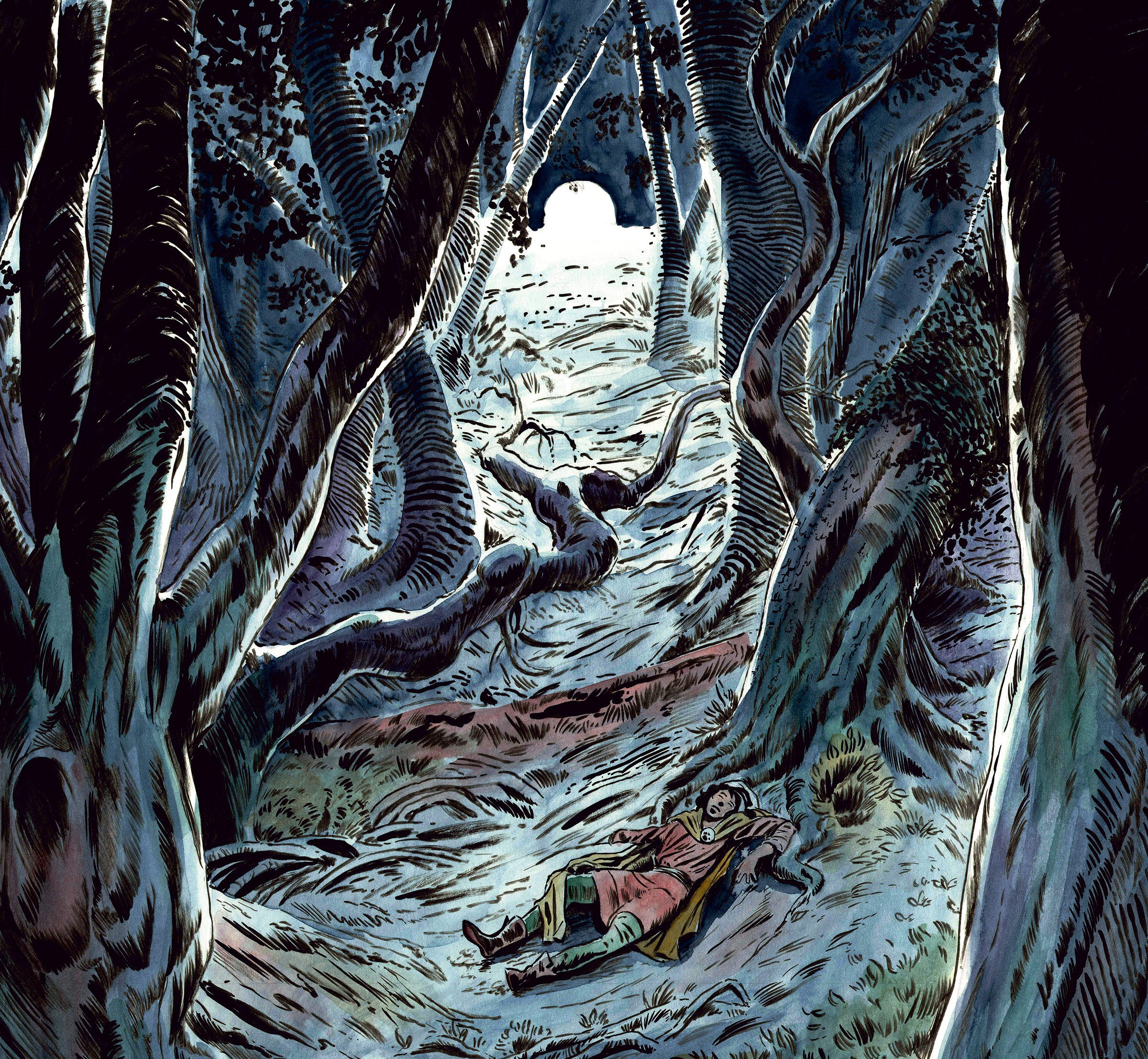
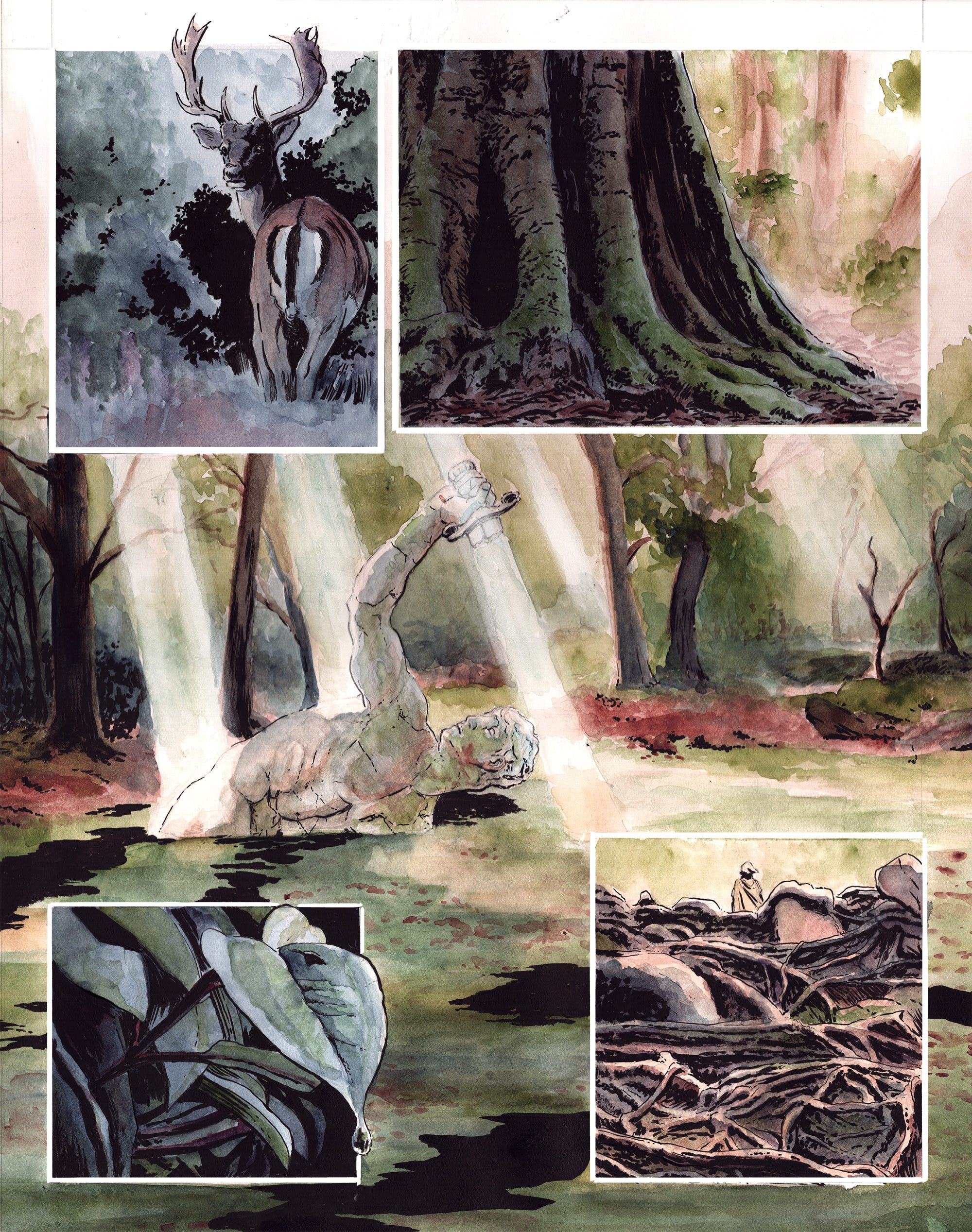
I’m creating each page on 16x20” watercolor paper. Working with natural pigment watercolors and india ink. There’s not a principled reason other than a desire to engage with physical material after years of being confined to a screen. But I want the tangible reality of the process to contribute to the gravity of the work.
This project is also difficult test for me in terms of writing. Each chapter will run 50-60 pages. Each an individual episode, self-contained story not unlike the Twilight Zone, but set in the world of English fable. Altogether, they form the story of a Saxon thegn, adrift and in search of purpose, and the Lombard Italian exile thrown into his path. My previous work on Theseus was heartfelt but comedic. For this project I’m looking for greater gravity. Drama and dreamlike fable is where I’m aiming.
More than two years ago, I was struck with a conviction that my digital illustration work was holding me back. I decided it was time to migrate to paper, where the safety net of eternally striking “Undo” was ripped away, and my weaknesses as an illustrator were on full display.
It was a painful migration, and you can revisit my accounting of the reasons and trials in this video I released a few months back.
Thanks for reading J. Holt's Newsletter of Illustration and Myth! Subscribe for free to receive new posts and support my work.
In the months and years after that decision, I’ve produced a lot of projects: graphic novels, books, illustrations. You can see a full list at the end of everything out right now and currently in progress. My art “style,” my creative process, and much about myself has changed as a consequence of that commitment.
I’ve realized since that this was not a conviction limited to me or to a small part of the population. There seems to be a broad reckoning with what the digitization of life is beginning to cost, or what it has quietly cost us already in years gone by.
And with it seems to have come a renewed vigor for physical things. I felt this viscerally when I tabled at HeroesCon in June. I had been there before, but only when I was selling books (created digitally) in the past. This time I still had my *Theseus* books to sell, but I also brought something that is now a natural outcome of my process: original artwork. And I sold it. I sold a lot more of it than I expected.
One of the pieces I sold at HeroesCon
I connect this to a larger trend that has many people hunting down physical copies of movies from eBay and secondhand stores, as well as a full-throated rebellion against Playstation which seems to be brewing after the company announced the discontinuation of physical game discs. And while this is undeniably caused in part by a general distrust of media companies and what they’ll do with their control over our digital libraries —I feel this does not exclude the romantic, aesthetic reality that comes with possessions we can touch.
You can rate it according to dispassionate terms and say that engaging another sense, like touch or even smell, increases our engagement with an object. But I also think this refers to a deeper idea which contains our interaction, as embodied beings, with a real and tangible world. No doubt that this increase in passion for the physical will be counted by some as was the “artisanal” movement that invigorated my generation (both affectionately and disparagingly referred to as hipsters) during 2005-2015. That seems to have come and gone, and this particular moment might too. In fact, that seems likely.
But I would frame this as the anticipated re-emergence of an idea that will never fully die so long as we have bodies, whether it’s a flannel-clad hipster listening to vinyl records in 2009, a 2026 video-gamer booting up a cartridge-fed Nintendo 64, or a 19th century Englishman purchasing a hand-crafted chair during the period we now call the “Arts and Crafts” movement —a kind of open rebellion against the manufactured in favor of the crafted.
Watercolor and ink illustration for “In Desert & Wilderness”
With clients, I’ve found the real and the physical has become a selling point for my work. Not only can the original piece of artwork become part of the deal, but there’s a kind of legitimacy that becomes a means to stand out in a market flooded will all that is fast and digital. Customers and creators alike value the legitimacy and intentionality that physical artwork entails. Right now, I think it’s booming, and will do so for some time.
When fishing, it’s tempting to re-cast the line wherever you see a fish jump. As soon as you pick everything up and move, another fish jumps elsewhere, and the cycle starts again. Rather, there’s wisdom in staying put, biding your time, and sticking with the strategic decision that planted you where you were to begin with. At least long enough to let it run its course, and certainly not to change just for that ever-powerful “fear of missing out.”
I value the traditional artwork for what it does for me in terms of discipline, care, attentiveness, and more. I believe there’s a spiritual value in wrangling with the material of Creation. The fervor around physical artwork will rise and fall. But first, I think it will always return, because it’s endemic to human nature. So I’m willing to fish in my spot with patience. But second, I think that it’s such a good thing, that I should keep doing it anyway.
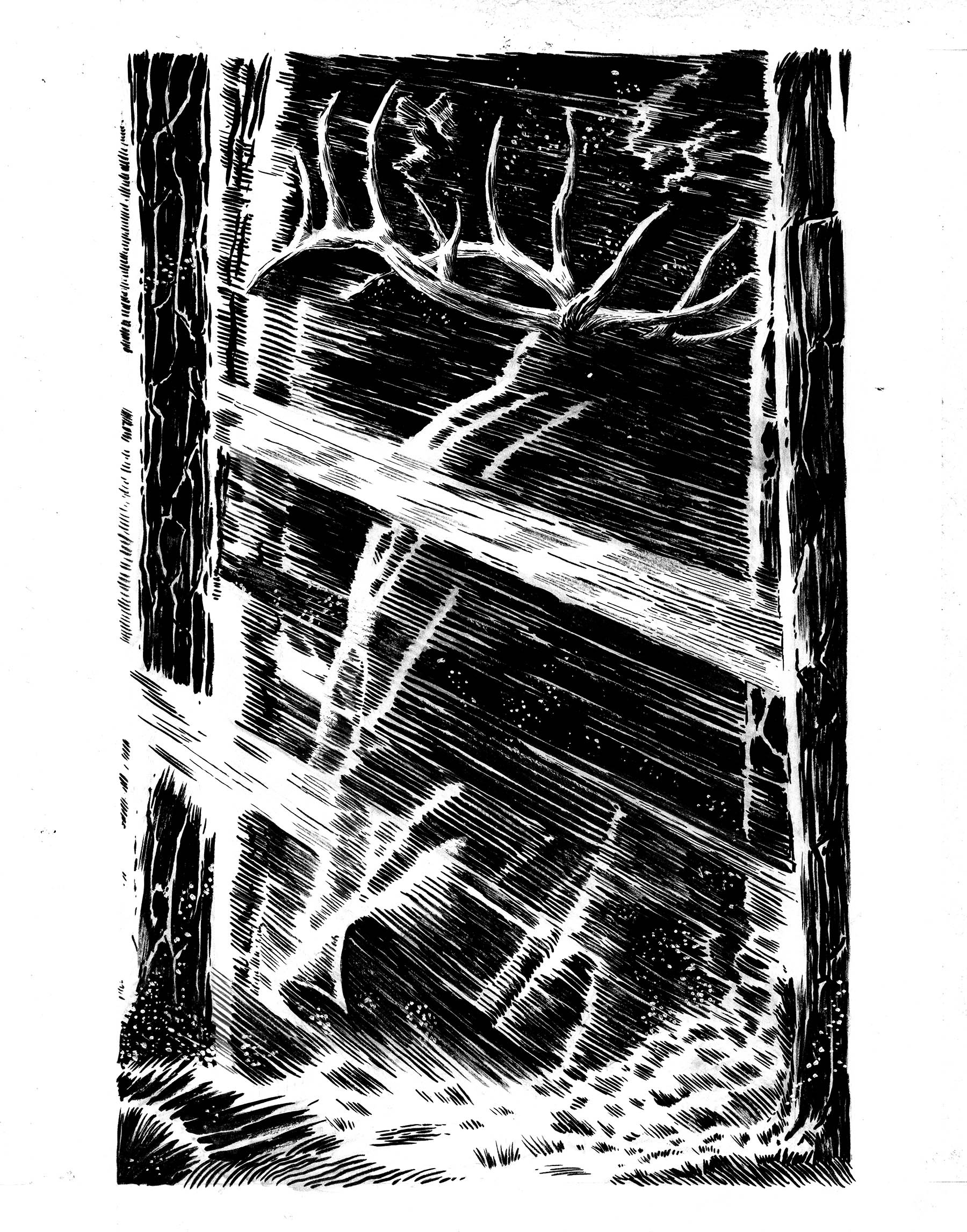
Ink illustration for “The Witch of Hobomock Pass”.
Projects complete and currently running
Everything I’m working on, or have recently produced.
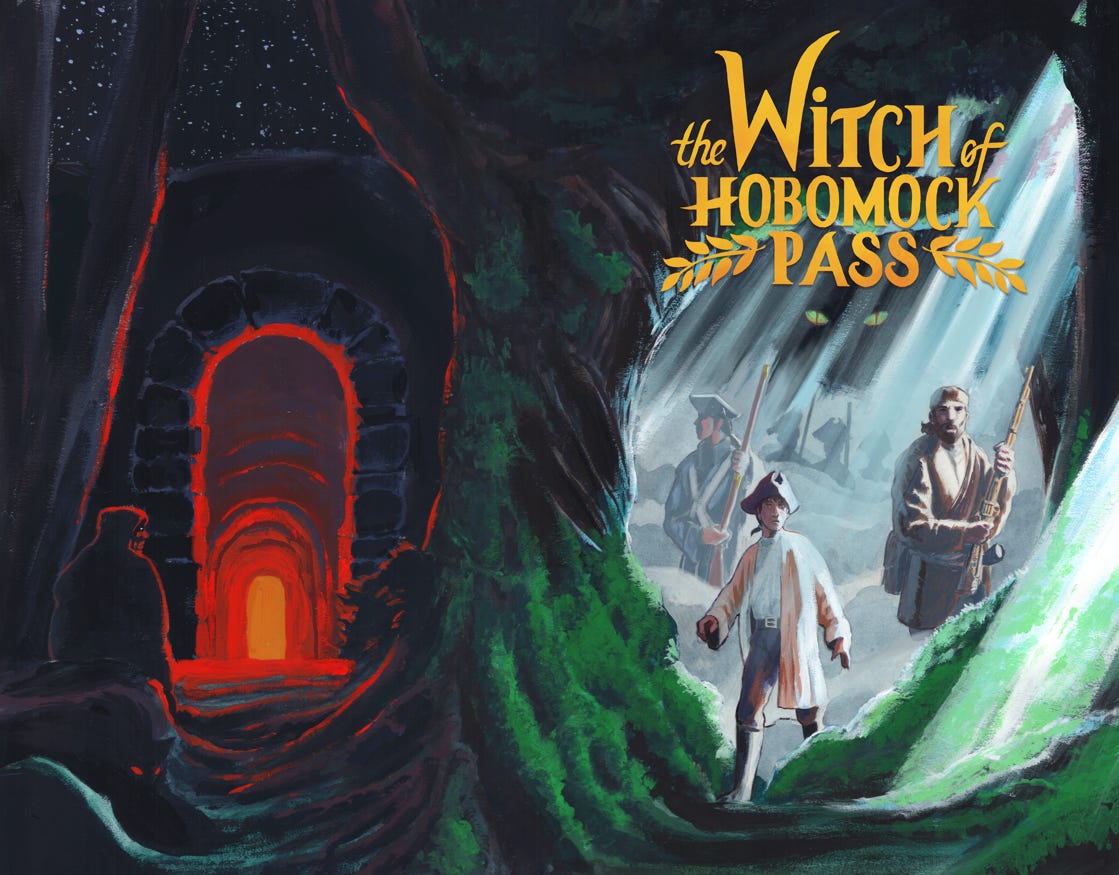
The Witch of Hobomock Pass
Cover painting (gouache) and hand-illustrated text for the book
And frontier-fantasy novel for which I have painted the cover and will be completing a series of interior illustration. This is currently crowdfunding over on Kickstarter (with original artwork for sale).
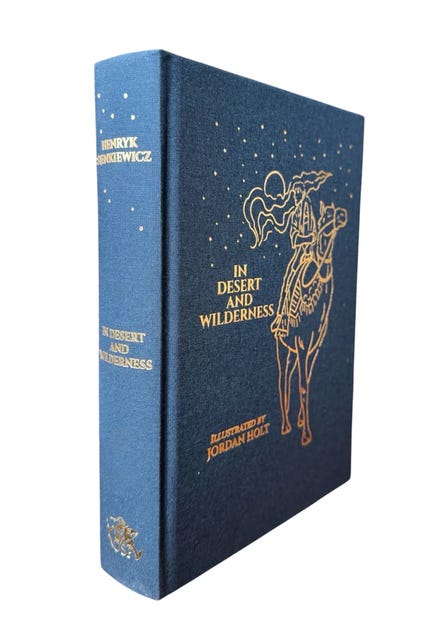
In Desert & Wilderness
A classic, early 20th century novel from Poland. This English translation is a cloth-bound, legacy-tier edition from Old Sovereign Publishing, with 12 illustrations from yours truly (watercolor and ink).
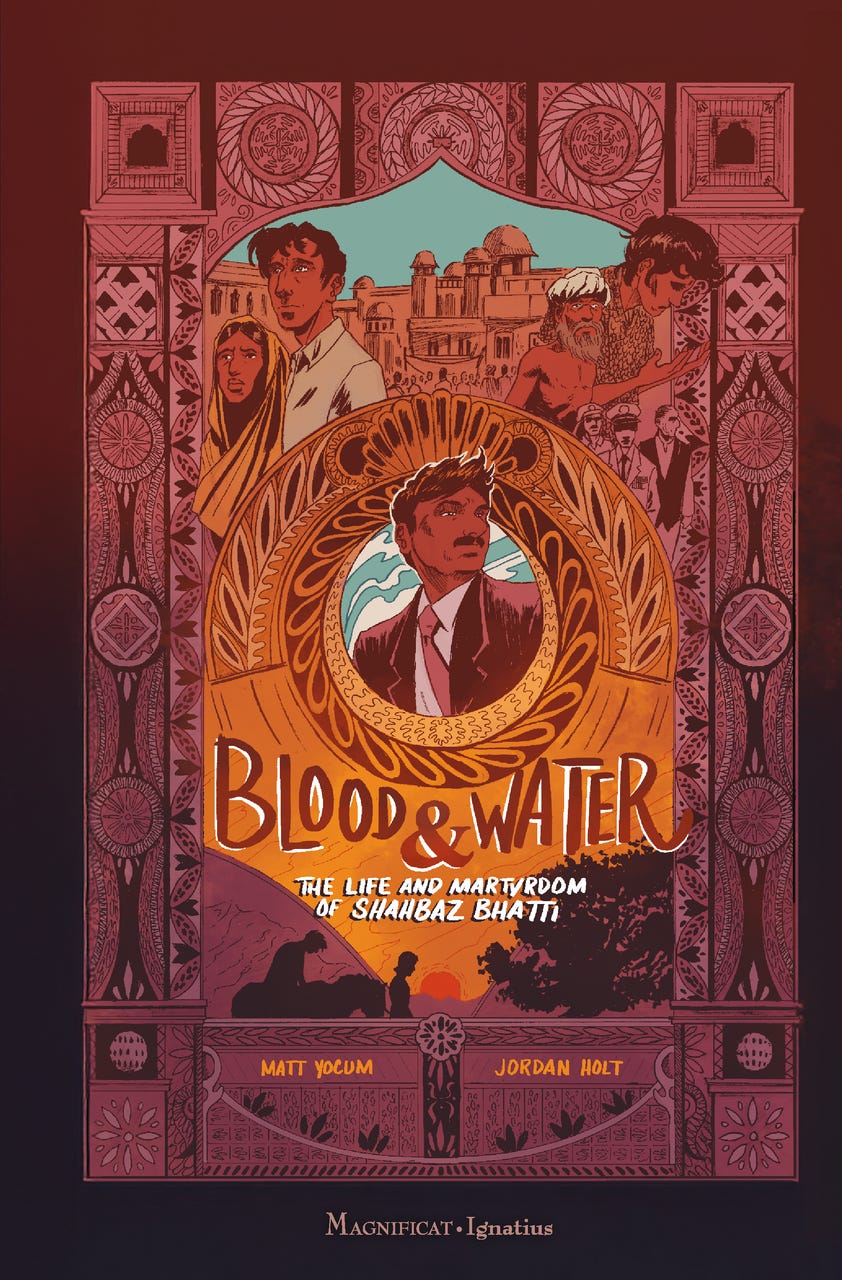
Blood & Water: The Life & Martyrdom of Shahbaz Bhatti
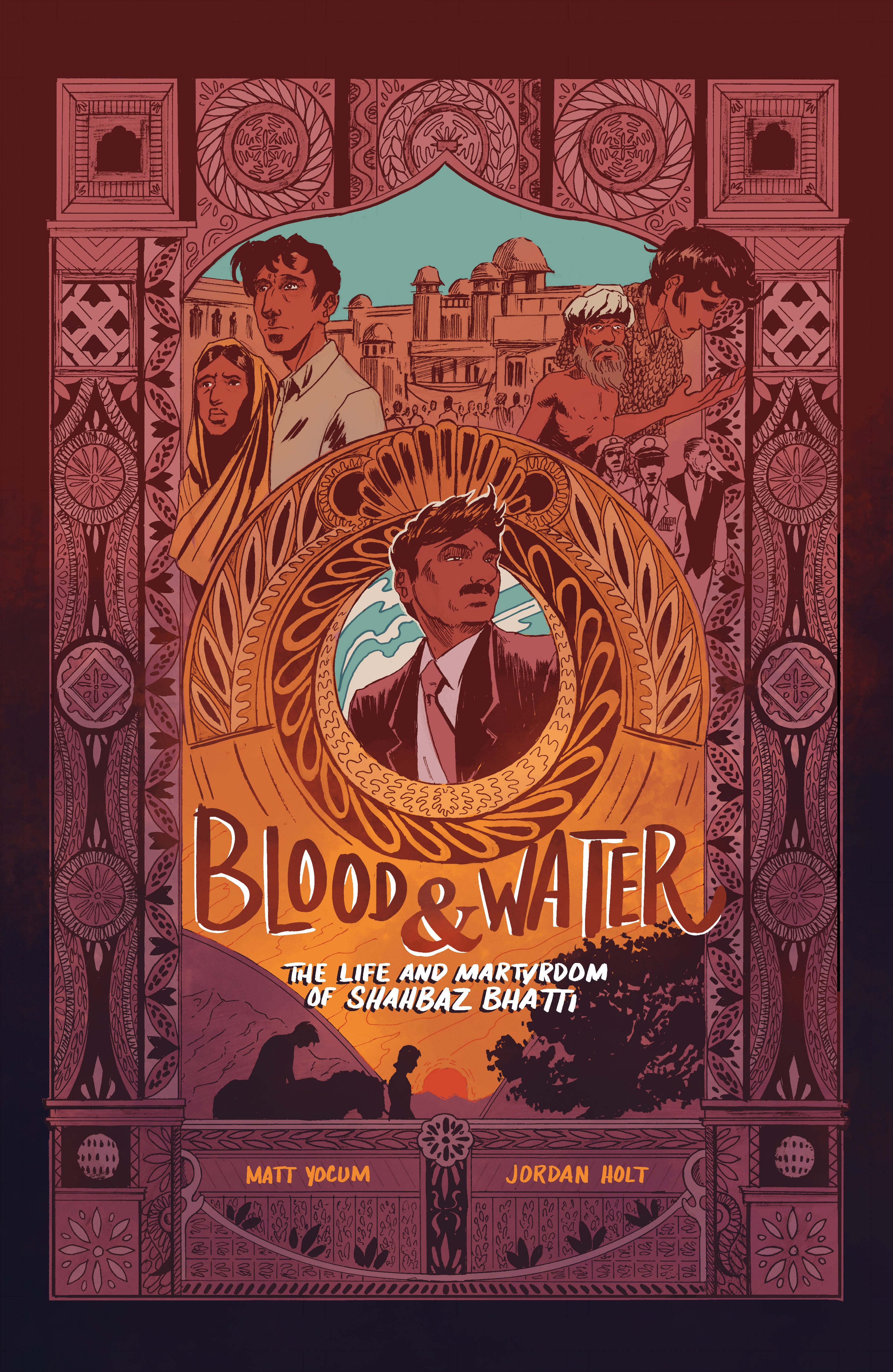
111 page graphic novel based on the life of Shahbaz Bhatti in Pakistan. Published by Ignatius Press.
More to come. Be well.
Thanks for reading J. Holt's Newsletter of Illustration and Myth! Subscribe for free to receive new posts and support my work.
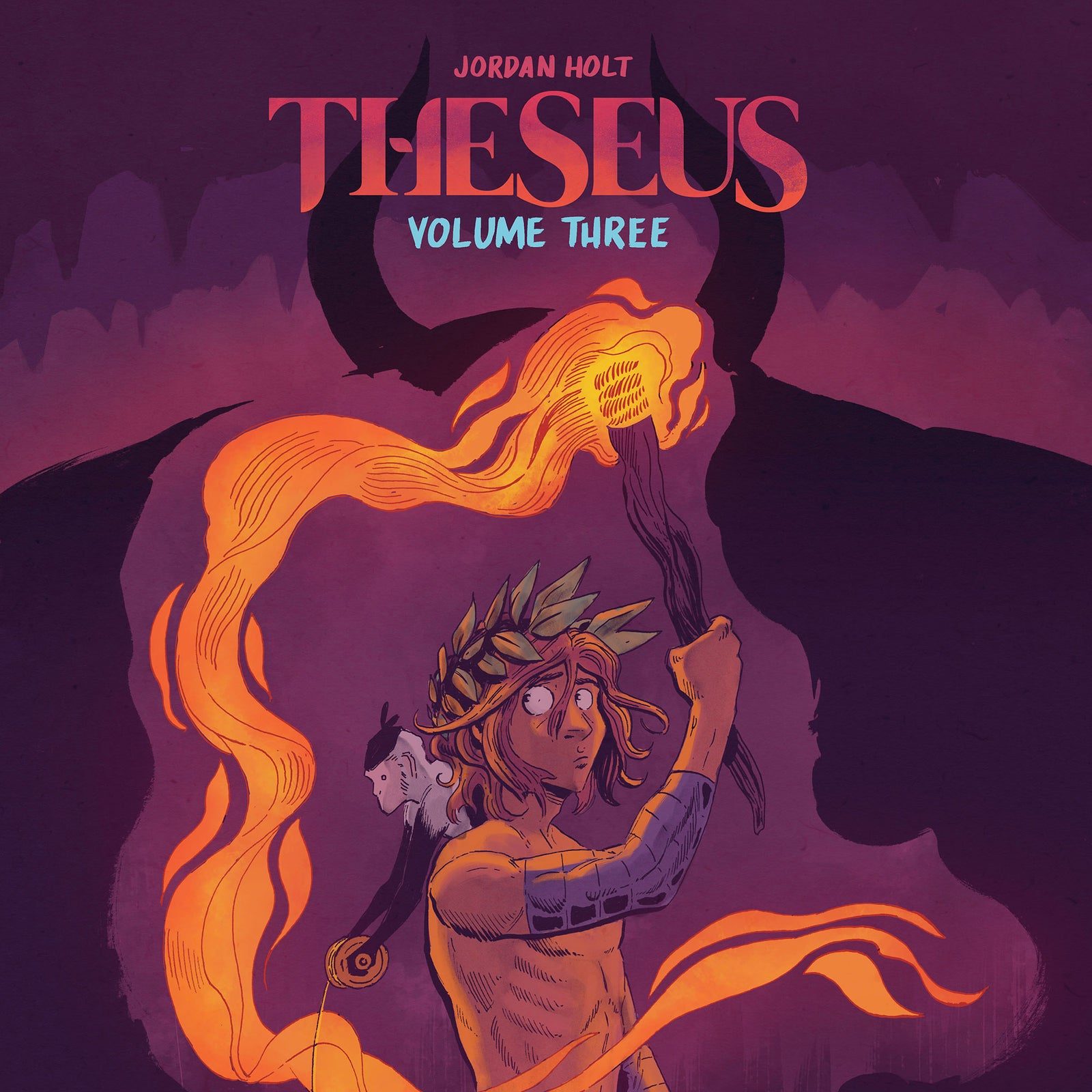
Starting with Theseus Vol. 3's crowdfunding launch
Read hereClose
I’ve lived a double-life for the last five years. I’ve spent my days in the classroom since 2013. In 2019 I was beginning to feel the wear and tear. It was the first summer ever that I wasn’t clamoring to get back in the classroom.
In 2020, especially after getting stuck at home for the second half of that Spring semester, teaching on Zoom to discouraged and disaffected students —higher ed became about survival. I had already begun drawing comics, particularly Theseus, which launches its third and final Kickstarter today, and it came to be a beneficial creative outlet.
Thanks for reading J. Holt's Newsletter of Illustration and Myth! Subscribe for free to receive new posts and support my work.
So finally, after five years of teaching during the day and drawing for 4-6 hours each night, I think I’m in position to take a year leave of absence from teaching and start clearing some projects off the table (and starting new ones).
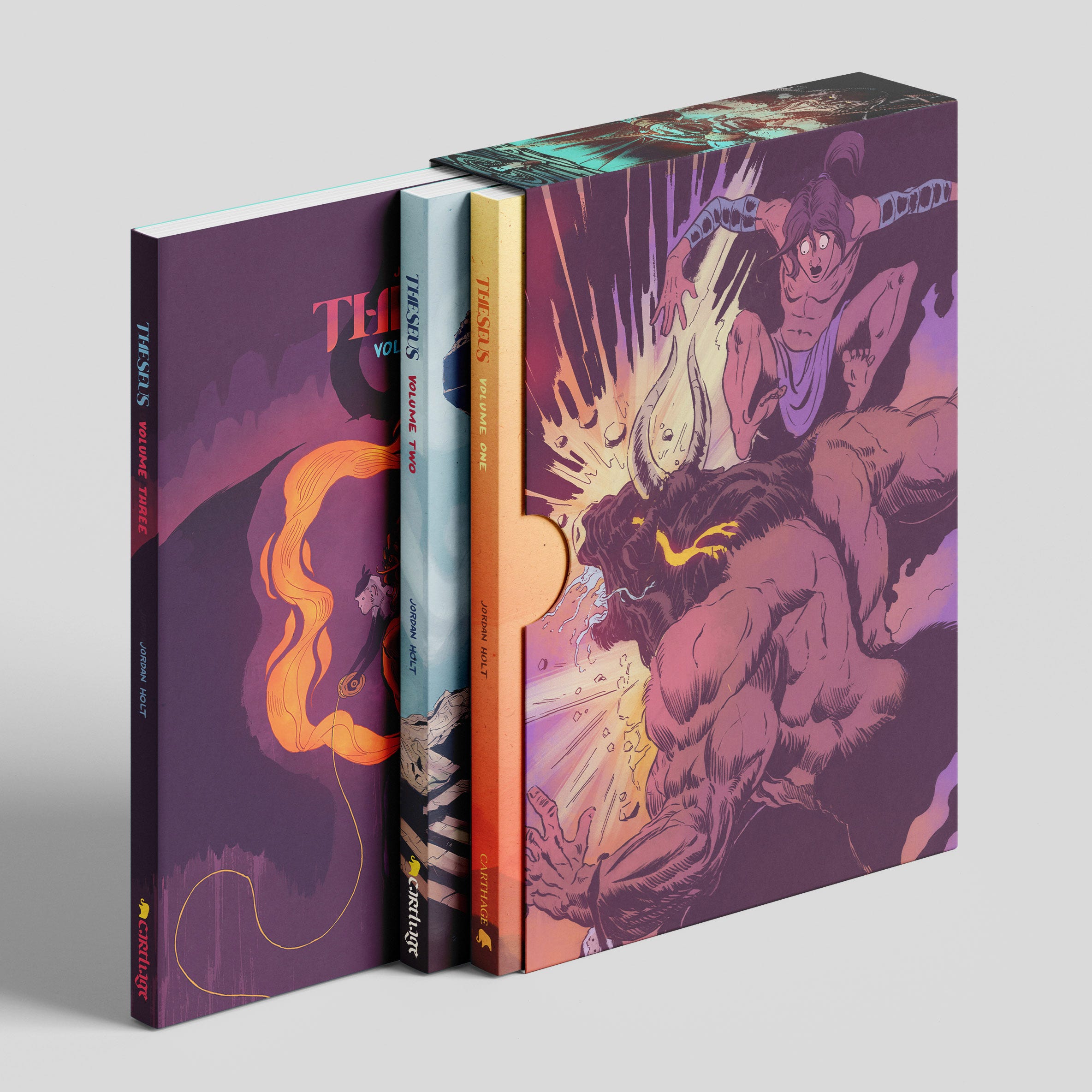
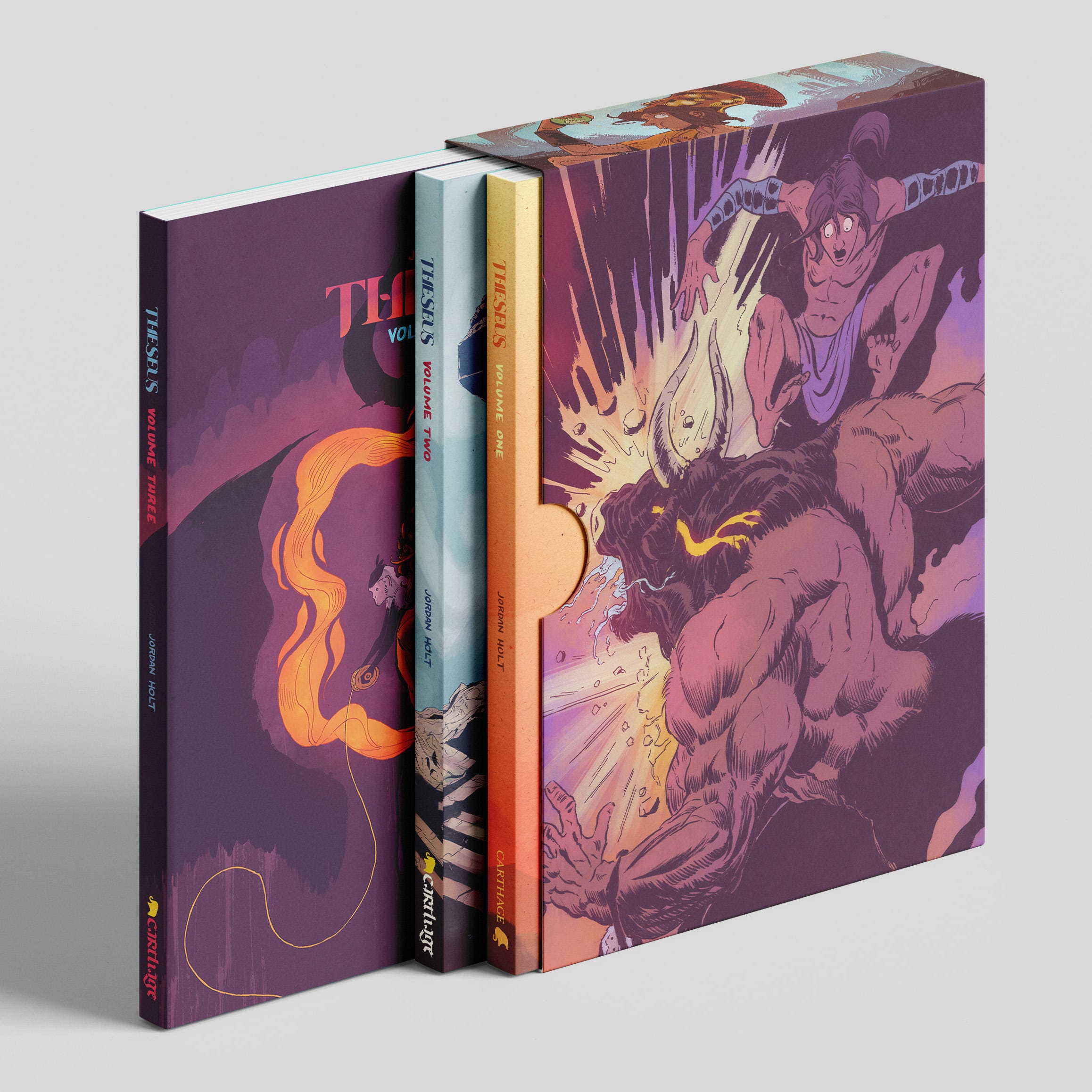
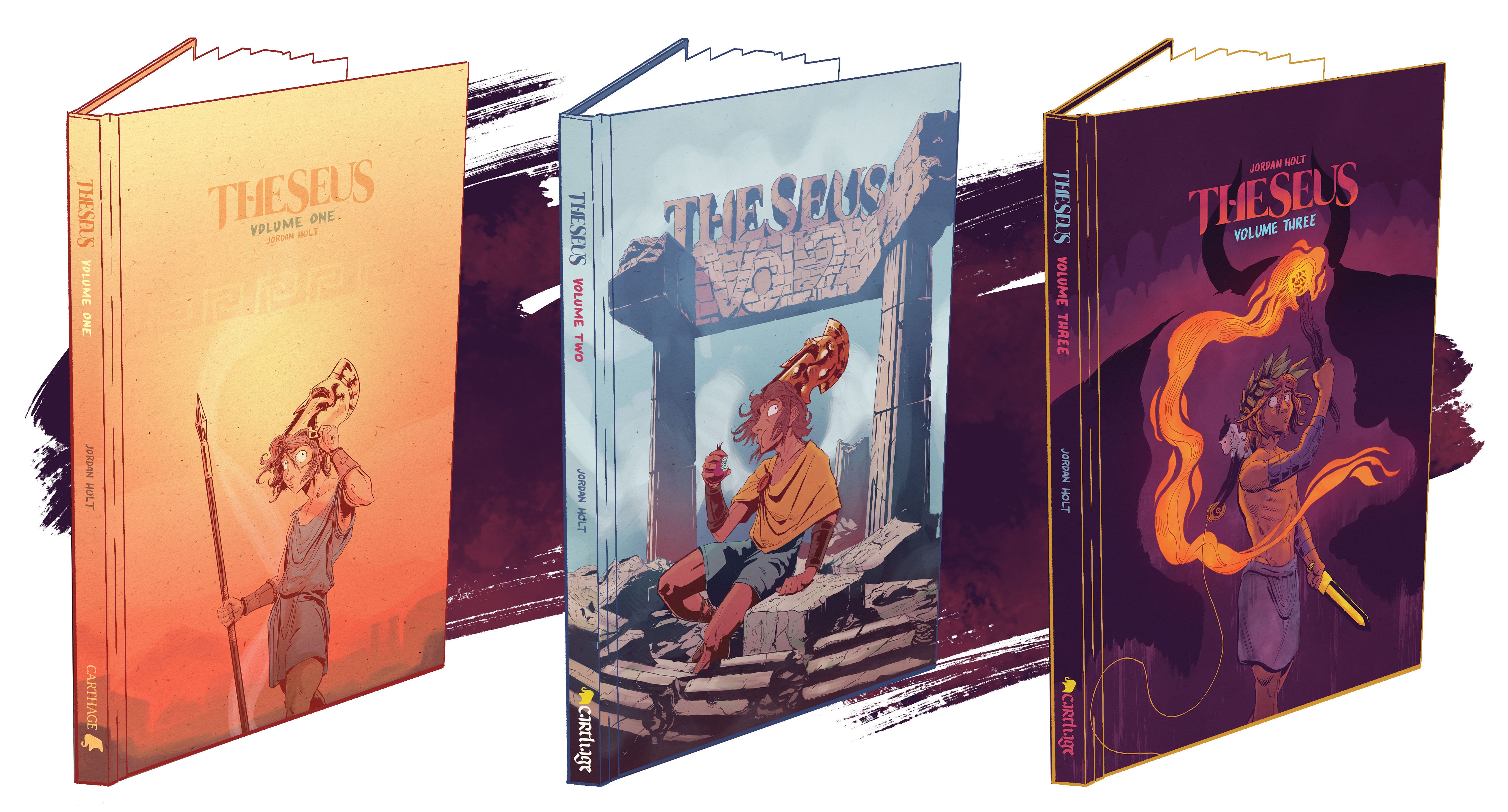
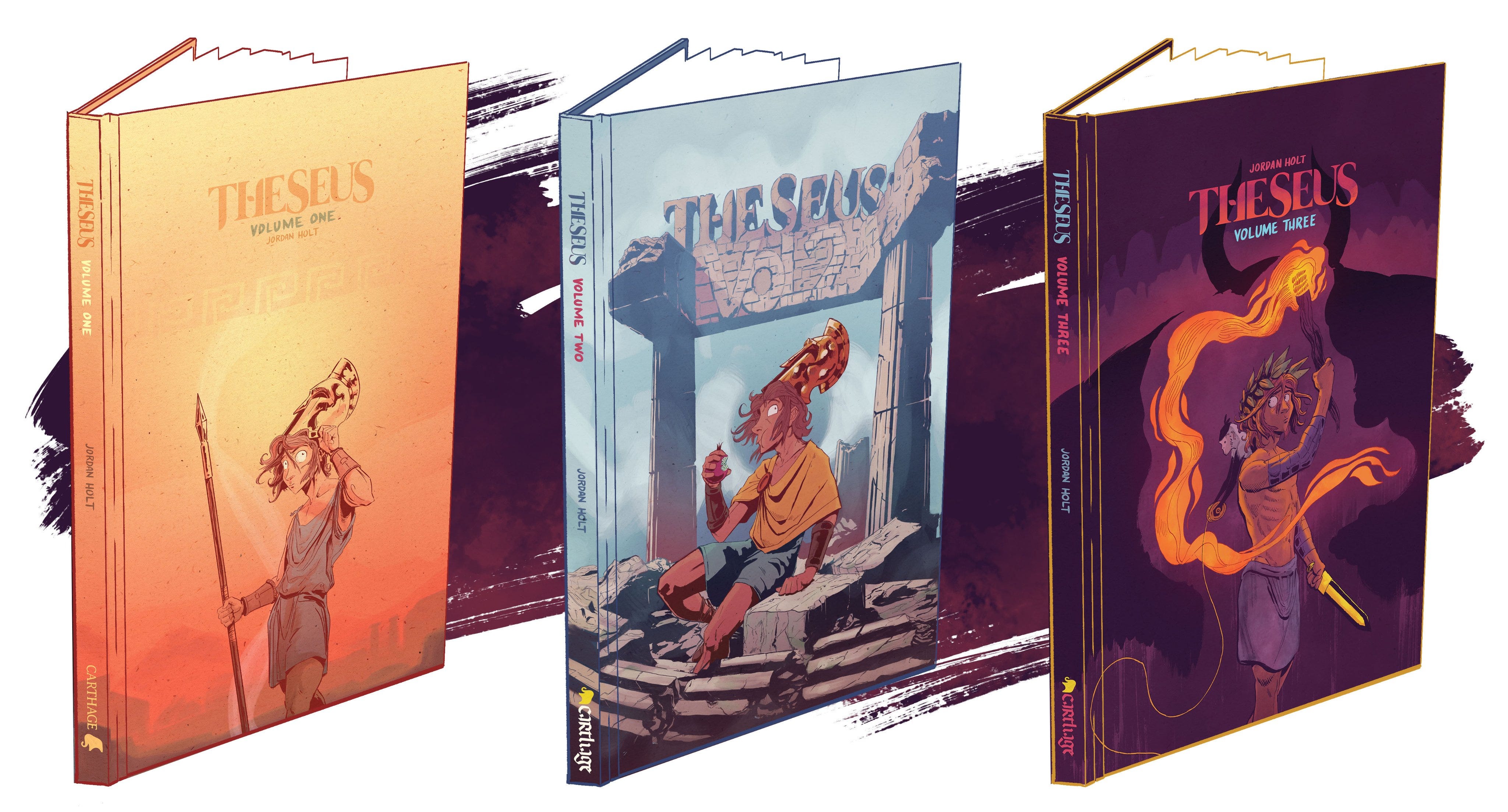
Theseus Vol. 3 launches its crowdfunder today, and wraps up a six year long project.Rendering of the slipcase for the Theseus trilogy.
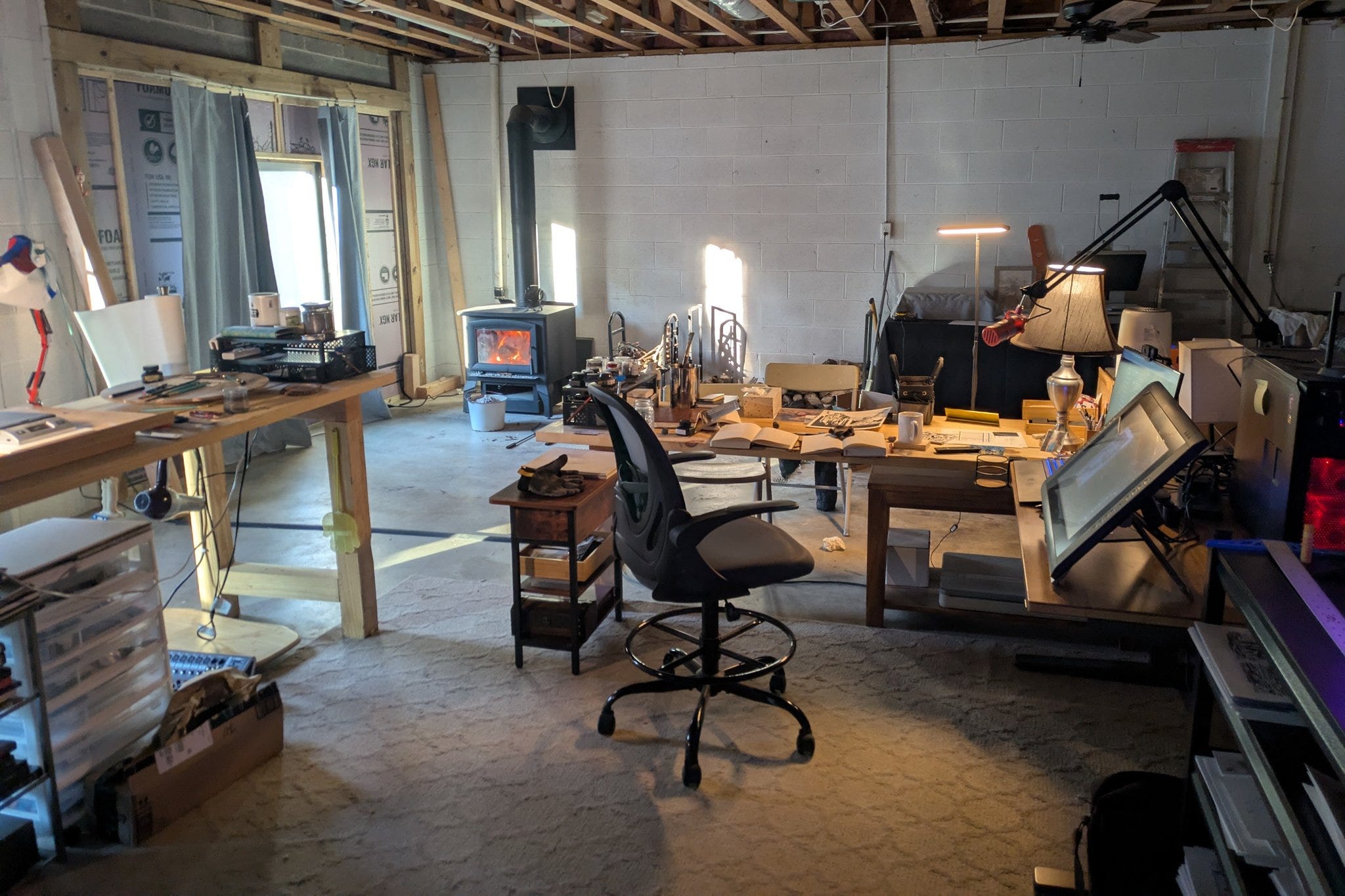
It also gives me the invaluable opportunity to spend more time at home with my family, working out of the garage which became a studio this summer.
This home studio from a converted garage is 600 sq ft of paradise for me.
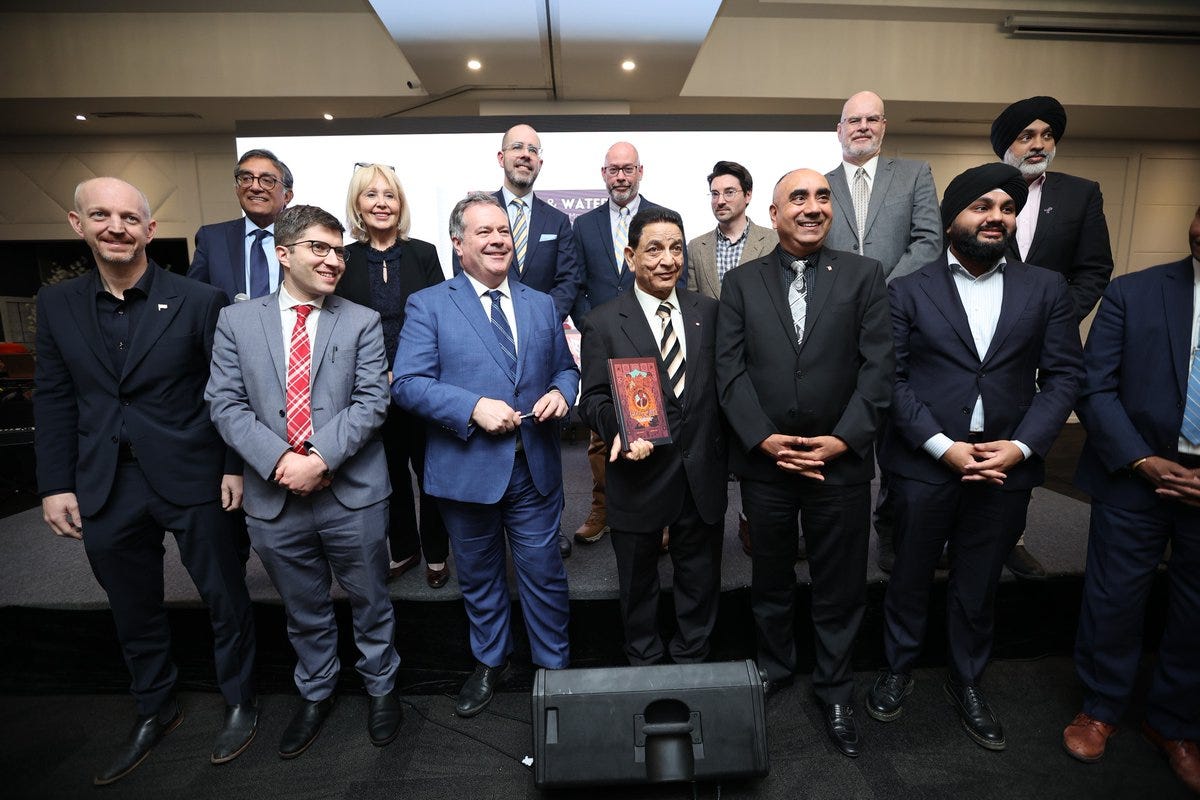
This past year I worked on a project called Blood & Water: The Life and Martyrdom of Shahbaz Bhatti which is now being published by Ignatius Press. I traveled to Toronto for the book launch and spent time with the Bhatti family and the Pakistani Christian diaspora in Canada. The book should be available today.
Standing in the back as an out-of-place but very welcomed Tennessean surrounded by Pakistani refugees and Canadian politicians.
This February I completed work on an illustrated English edition of the early 20th century Polish adventure novel In Desert & Wilderness, which is now in publication with Old Sovereign Publishing in the UK. Should be out in April or May.
So now I’m looking forward, and June of 2026-August of 2027 is now fully dedicated to drawing. So here’s what I’m intending to work on for the coming year.
Client work: I’m taking on small-time clients to fill the gaps between larger projects.
Publisher contracts: I’m in the midst of talks for a big illustrated book I’m really excited about and if it goes through I’ll be sharing that process here.
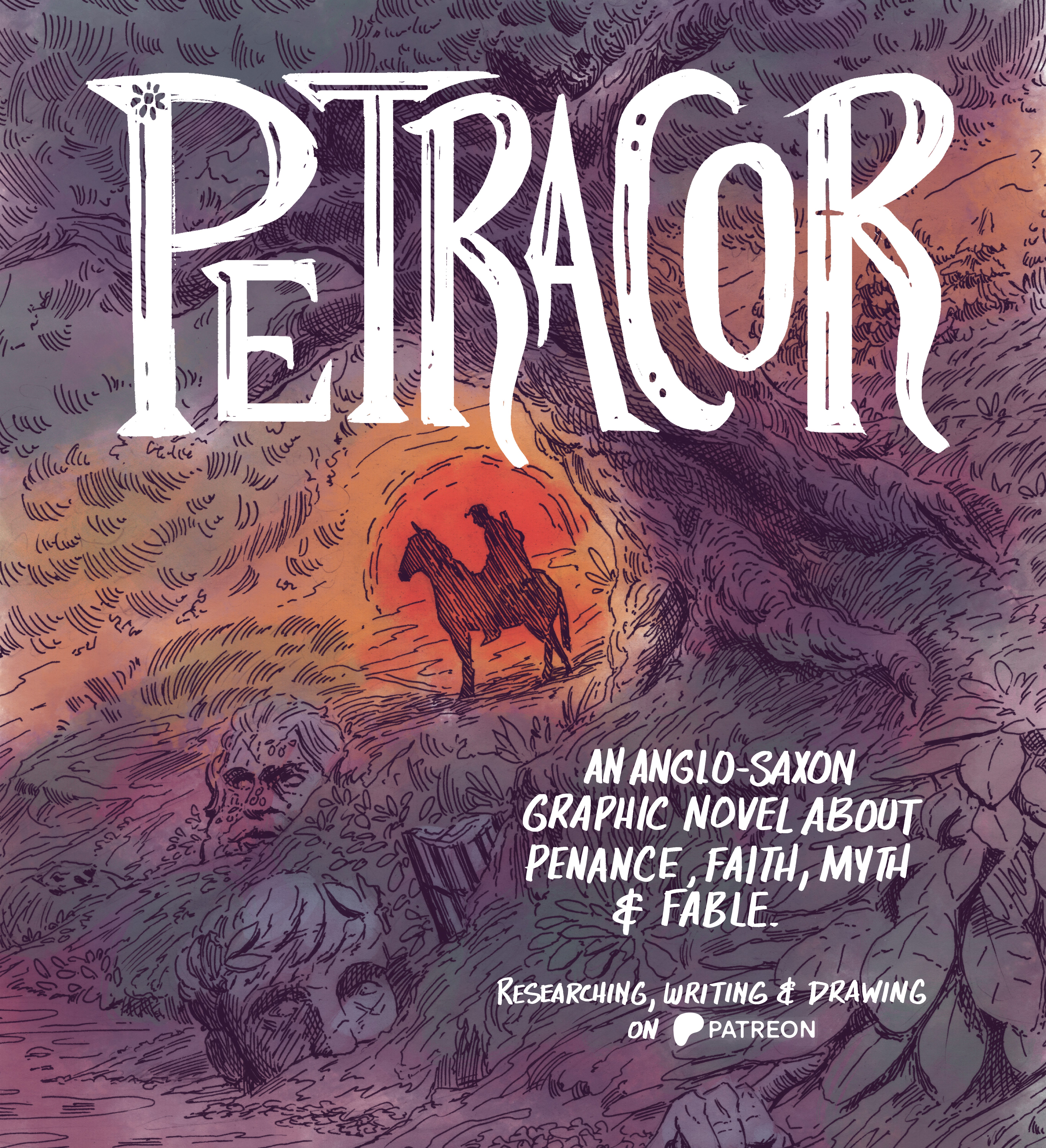
PetraCor, my personal Anglo-Saxon project.
I’m very enthusiastic about my next graphic novel, which will feature a story set in Anglo-Saxon England in the year 793. Following a thane and a Tuscan refugee (from Charlemagne’s takeover of Norther Italy) as they traverse England to reach the Holy Island of Lindisfarne.
I’ve begun work on the graphic novel, working entirely with ink and watercolor, but it will be a long and beautiful process. I’m really looking forward to sinking more time into it.
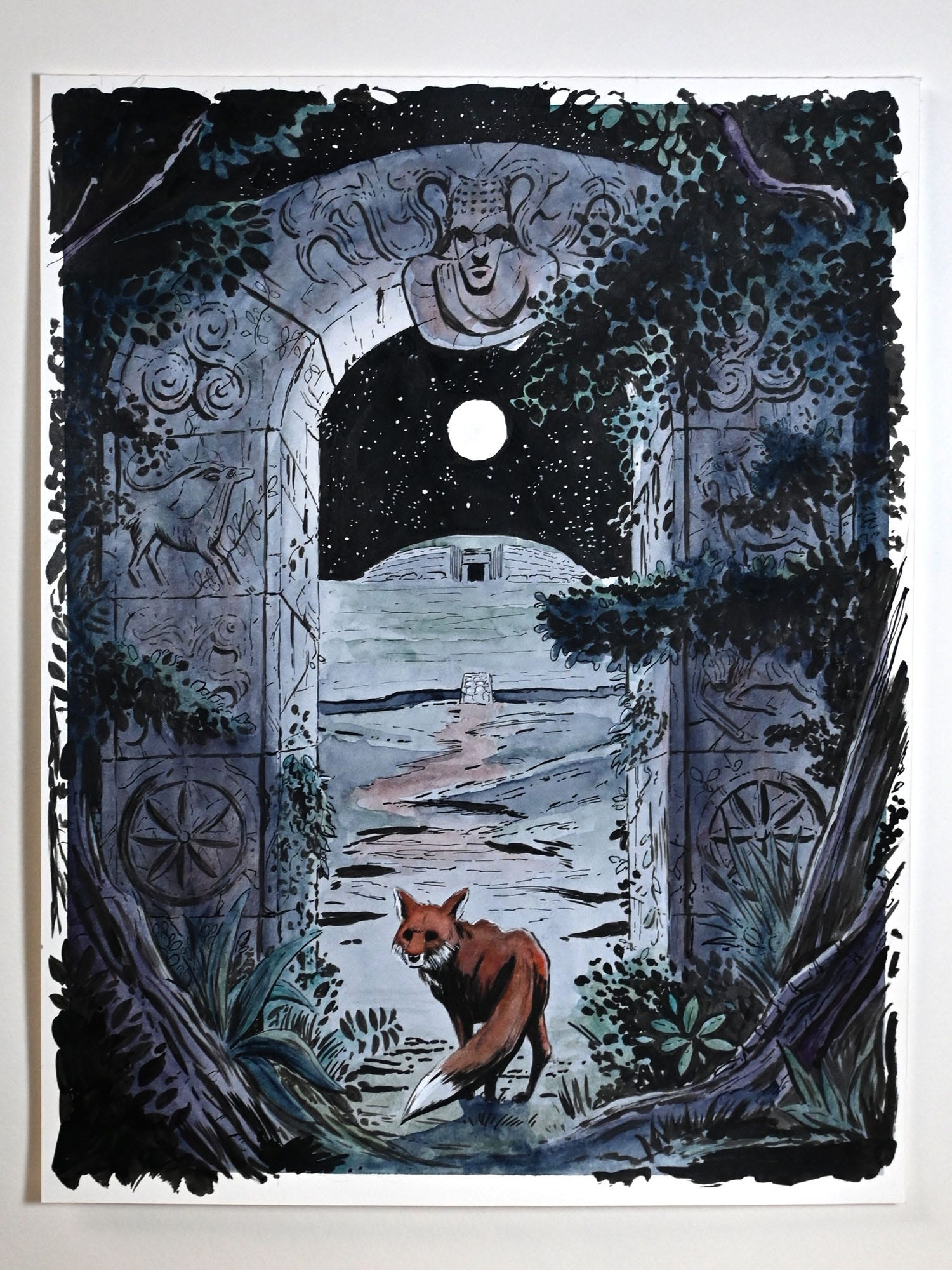
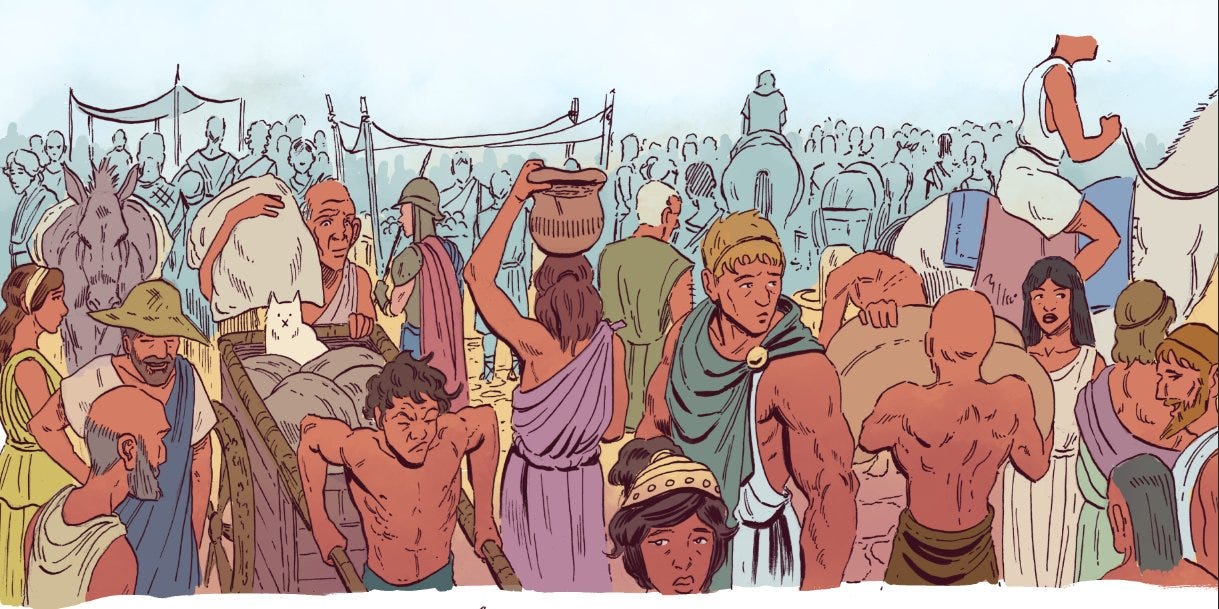
A piece of concept art for “PetraCor.”
In addition, I’m going to begin using this newsletter more habitually and broadly. I’ll record my creative works here like a creative journal, but also I want to practice my writing over the next year, so I’ll be putting in responses, devotions and reflections from various works of art as well. Hopefully something that others can derive satisfaction from reading.
Thank you all, and God bless you.
J. Holt
Don’t forget about Theseus Vol. 3! I’m paying the bills with this now so I’m very motivated that you should remember it if you favor Greek mythology, adventure and humor.
Thanks for reading J. Holt's Newsletter of Illustration and Myth! Subscribe for free to receive new posts and support my work.
Reflections on technology prompted by the new wave of this old debate + new books on the horizon.
Read hereClose
I started using digital drawing tools in grad school back in 2012. That became my primary method of drawing. In 2023, the debate around art and image generation made me start to reflect on tools in general —realizing that my philosophy on this topic just wasn’t well thought through.
I turned to traditional pencil and ink work on paper for a new graphic novel project starting at the end of 2023 (Blood & Water:The Life & Martyrdom of Shahbaz Bhatti which is now available for pre-order from Ignatius Press before it comes out in March)
After a couple of years of experimenting with watercolor, ink, paper, and digital, I recorded my thoughts on this topic and published it today on Youtube. It’s not a prescription, but certainly I hope it helps anyone else struggling with the same questions reflect on what is gained and lost by various tools in this fast-moving world of media production.
And for the long-suffering Theseus reader, who has waited while I’ve juggled various projects with publishers, Theseus Vol. 3 is almost finished, and the Kickstarter for the new book will go live on March 16. There’s a notification sign-up at this link. In May it will become available in my own store.
The days of drawing Theseus are dwindling. Theseus Vol. 3 is over half complete now, and I’m churning through pages quickly now that I’ve finished working on a 2024 graphic novel that I still haven’t gotten clearance to talk about. But Theseus is posting regularly at theseuscomic.com where you can catch up on pages. And I’m running a sale on the hard copies of Vol. 1 & 2 over at Carthage Workshop.
A New Project Looms
With Theseus going through it’s final stages, and five years of work coming to its culmination, I’ve now begun researching for a new graphic novel set in the year 793AD in Anglo-Saxon England. I’ve been thinking about this story for years, and I intend it to be my magnum opus, my masterwork.
I’ve also dreamed of a way to make a story about faith and holiness that is beautiful, moving, challenging, and entertaining. This is my true and full effort to do so.
As the image indicates, I’m keeping a detailed journal of its creation for Patreon patrons. It’s far too granular and detailed (and filled with spoilers) to subject everyone on a email list to it, but for those interested in process, historical research, and the day to day drawing process —I’ve set it up to share.
As for the book itself, let me give you a brief pitch:
In 793AD Vikings raided the English coast, landing at the Holy Island, a quiet monastery called Lindisfarne. A handwritten, beautifully illustrated copy of the Gospels was kept in the abbey, lost its cover but survived, possibly during the raid. My story attempts to answer the questions behind that collection of the Gospels, following the journey of a Thane, converted from paganism and in search of the meanings of penance and holiness as he seeks to lose his “heart of stone.” His tale and journey will be draped in the fables, creatures, and myths of the English isles, the Germanic and Nordic traditions, and the history of Christianity in Britain.
I’ll also be drawing it entirely on paper, with watercolor instead of digital coloring, inspired by great medieval-themed works like the monumental Prince Valiant by Hal Foster.
As I study history, learn Old English (including runes) and write the story, you can follow along if that’s your sort of thing. And I’ll send out occasional updates here as Theseus finishes, Petracor begins, and other projects become available like more Panomachea decks.
Some things you thought you knew you let drop as you age. Some things you vaguely understood become reinforced and strengthened with time.
One of those: mythology is so necessary to understand reality that we weave it into everything.
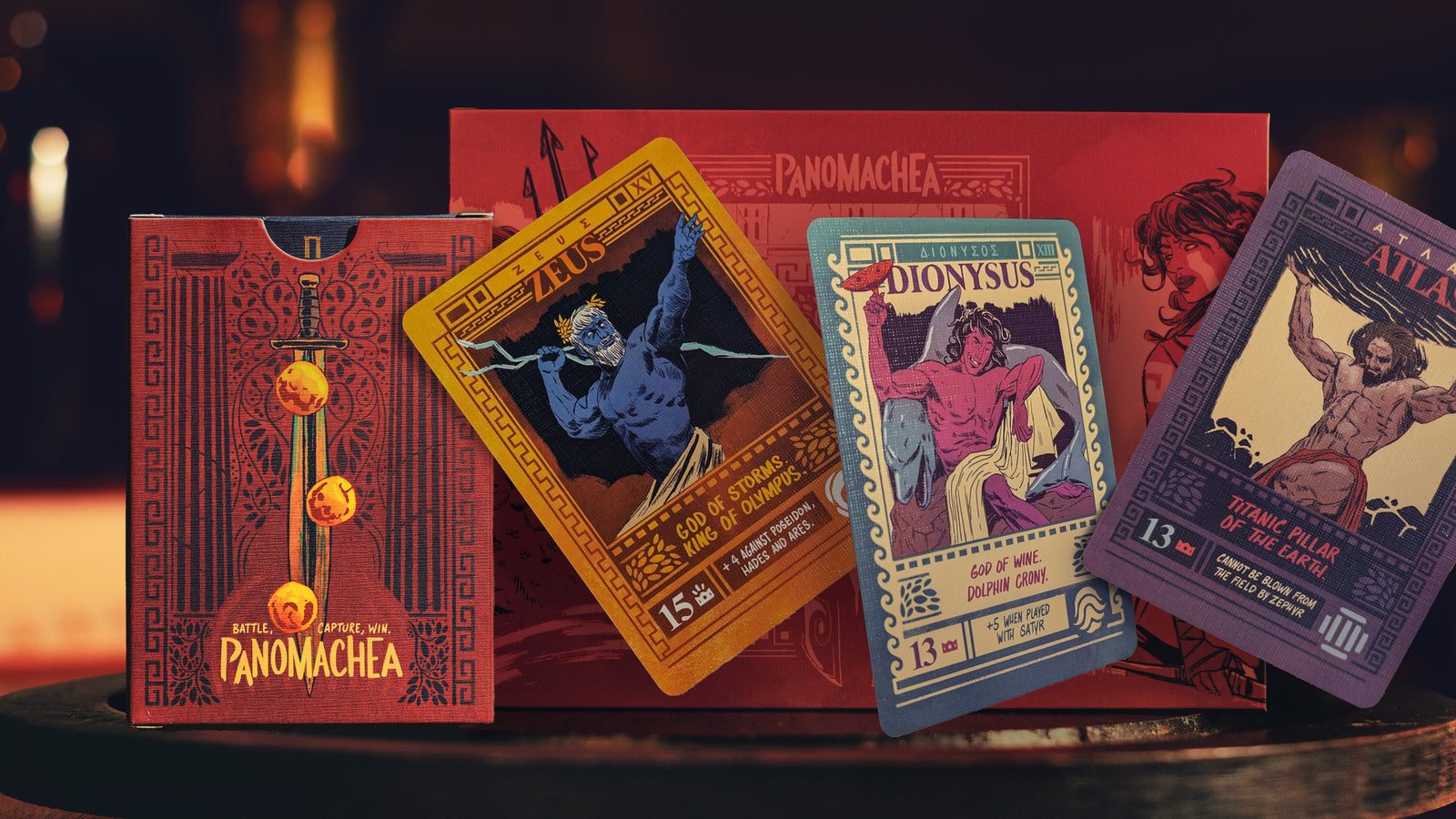
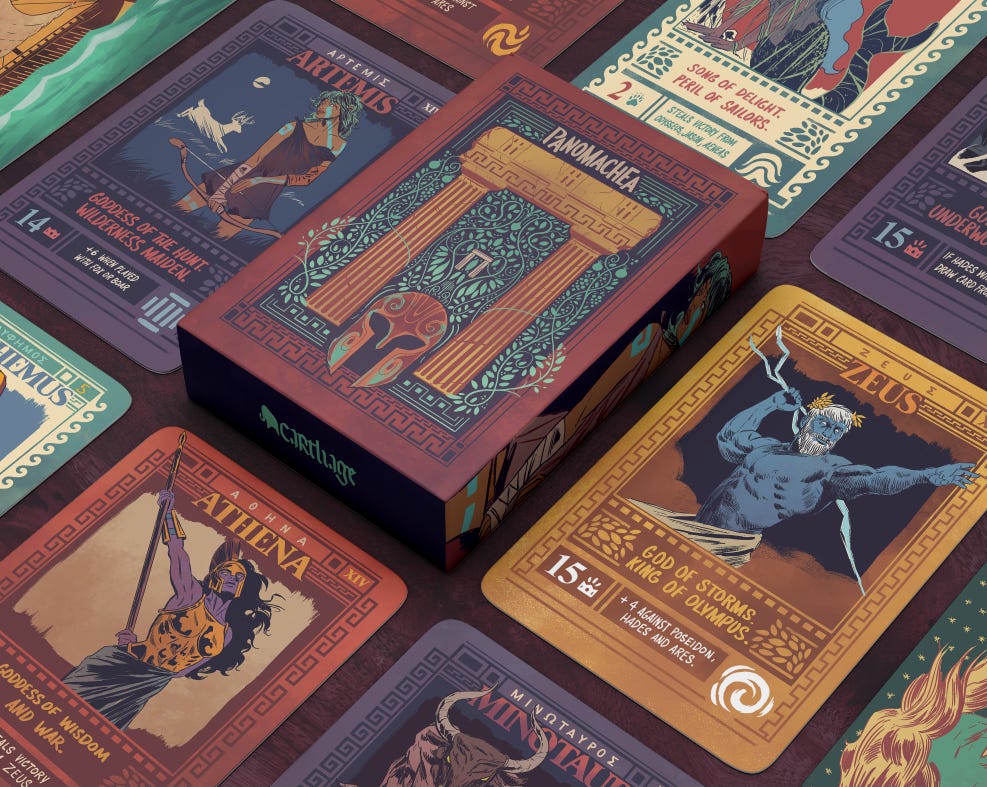
I’ve brought a couple of things to help with that this week: First, I still have my Greek myth card game crowdfunding. I think you’d really like it and should pick up a deck. It’s fun. I put a lot of effort into the illustration to make it look great, and I used high quality stock to make it durable and beautiful. Check it out.
But I also just finished and put together a video essay on the 1989 Batman film. I’ve seen it countless times since I was a kid, but the more I learn about art history and literature the more I see the reverberating themes even in something that I once regarded as purely aimed at entertainment.
Themes of self-sacrifice, overcoming adversity and conquering one’s desires in order to better the common good or to show love for individuals is universal within great stories. When laid out as bullet points (as I essentially just did) it sounds a bit bland.
But likewise it sounds a bit bland to say to someone “the only colors you can use are blue, yellow and red.” When in reality, through those pigments, every conceivable color can be made. The best things are made of simple parts. What’s nutritious is simply nutritious, and it’s foolish to turn up our collective noses at the rhythmic simplicity of myth.
We’re fundamentally shaped by stories, so surround yourselves with good ones. Socrates (in Plato’s Republic Book 3) would certainly concur.
Something from Illustration Work
As I’ve mentioned before, I’ve spent almost a year working quietly behind the scenes on a graphic novel that I was hired to create. I didn’t write it, I’m just the hired pen who illustrates.
I can’t really share much from it, but I think I can share a page or two that depict some biblical narrative. There’s a few of these sprinkled through the book. See if you can identify the stories.
This has been a strange year. I’ve been quiet in communication because I’ve been working on a graphic novel that has taken longer than expected. I meant to wrap it up. It’s not mythology and being done with another group who contracted. But in the evenings I still wanted to draw mythology. So I just kept drawing cards and playtesting a game with my kids. This Greek mythology game is now live on Kickstarter.
I’m extremely proud of it. Making a game like this was a bucket list item I didn’t think I’d get to until much further down the road. I planned to do a standard deck of cards, but that evolved into an original strategy/battle game with 84 cards, 56 of which are completely unique character designs.
I also was so compelled that this was a good idea that I wanted to shorten the time between campaign and shipping. So I invested my illustration earnings and ordered everything upfront. Everything should be ready to go out at the end of the campaign in mid-November.
I took this newsletter offline because my drawing life and schedule rapidly changed, and I wanted to rethink the it’s purpose.
I went under contract on a graphic novel outside of my Theseus work, which I’ve been quietly working on for the last 6 months.
Theseus had to be put on hiatus, although I’m very much looking forward to wrapping this project and picking it back up (hopefully by summer’s end)
I started using Youtube a great deal. And I’ve added a lot of videos I personally think is very interesting.
So although I’ll still be including pages that I complete in this newsletter, I’m expanding it to include other projects I’m working on and interesting things of art, illustration, myth and history.
So here we go.
All of my days have been spent on comic pages, and in March I took a packet of blank cards, drew a bunch of gods, monsters and heroes on them, and started working out a card game with my kids at the kitchen table, mostly as a way to blow off steam.
I wanted to work but I was exhausted by panels and figures and narrative and wanted to do something simple. So I started drawing cards. As a result, I somewhat accidentally created an entire card game with 67 original illustrated card designs.
You can read more about this at panomachea.com. But for any of you who are local to the Cleveland, TN area. I’m hosting a tournament to playtest it on Monday, July 8. I’m taking signups here. It has prizes and pizza.
Youtube
Realizing that I was still sleeping 4-6 hours a night and it was making me weak, I began putting time into Youtube videos.
I’ve been very active on there, doing art and media analysis as well as tutorials on illustration. Go watch this one on a story from art history. Getting people to watch videos about art history is like pulling teeth. I put a lot of jokes and time into that one though. I’ve also got this one on the color theory of Aladdin, for the popular media oriented types.
Outro
I’ve been extremely busy for the last eight or nine months creating lots of new things (and increasing the number of my children by 33%), so I won’t overwhelm on this submission. Instead, I’ll leave it here for now and encourage you to look at the card game and the Youtube channel while I work away on this new graphic novel (which I’ll get to say some more about soon). I’ll leave off with a few sketches I’ve knocked out lately, and I’ll put together a new newsletter soon.
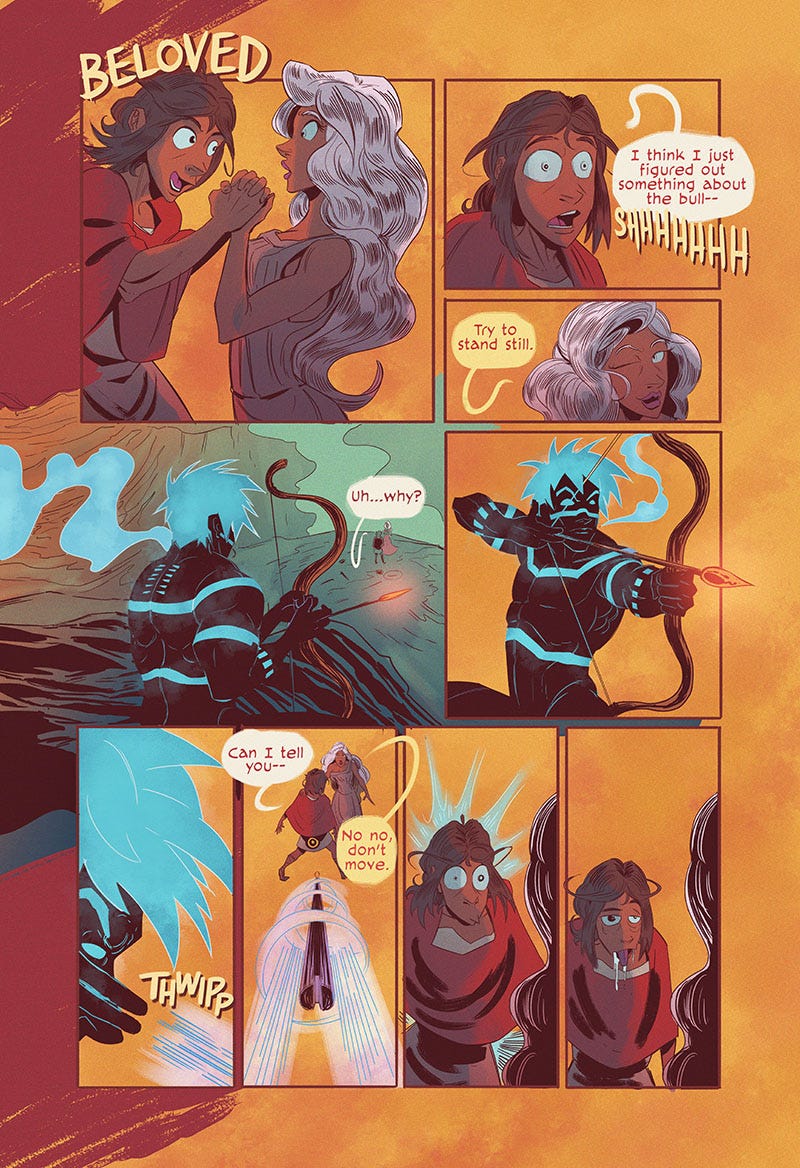
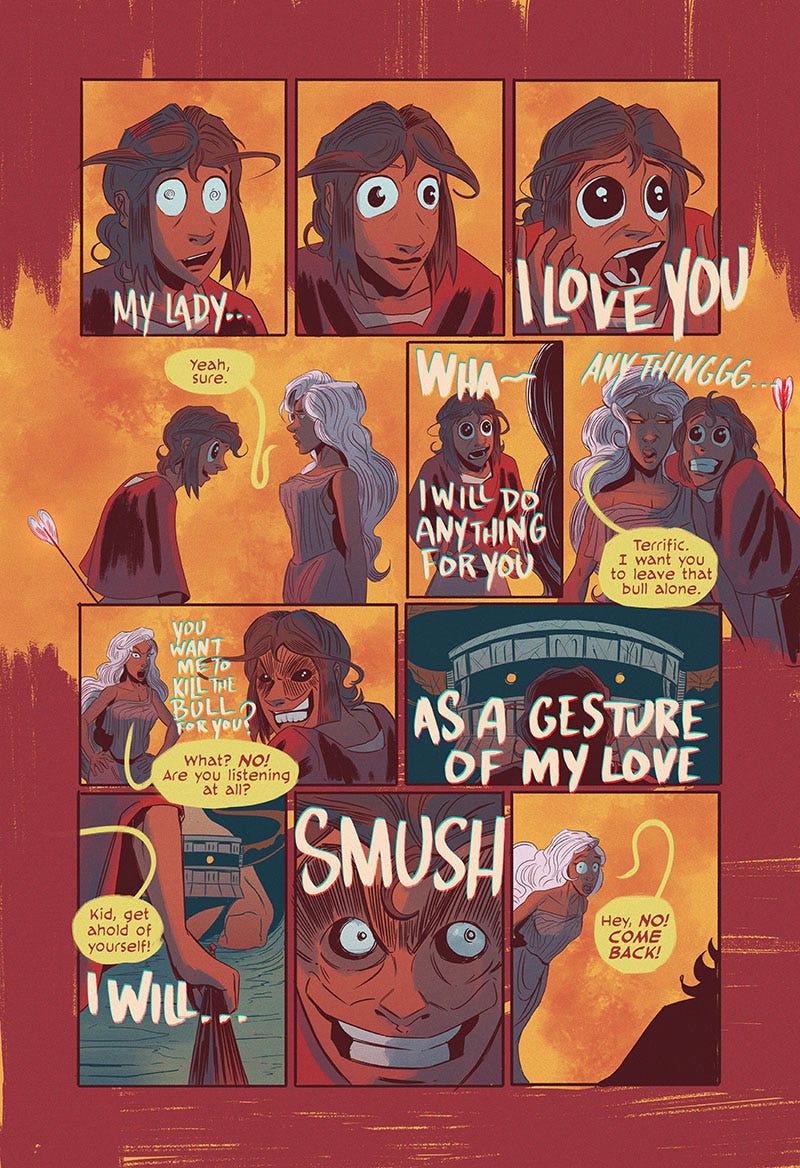
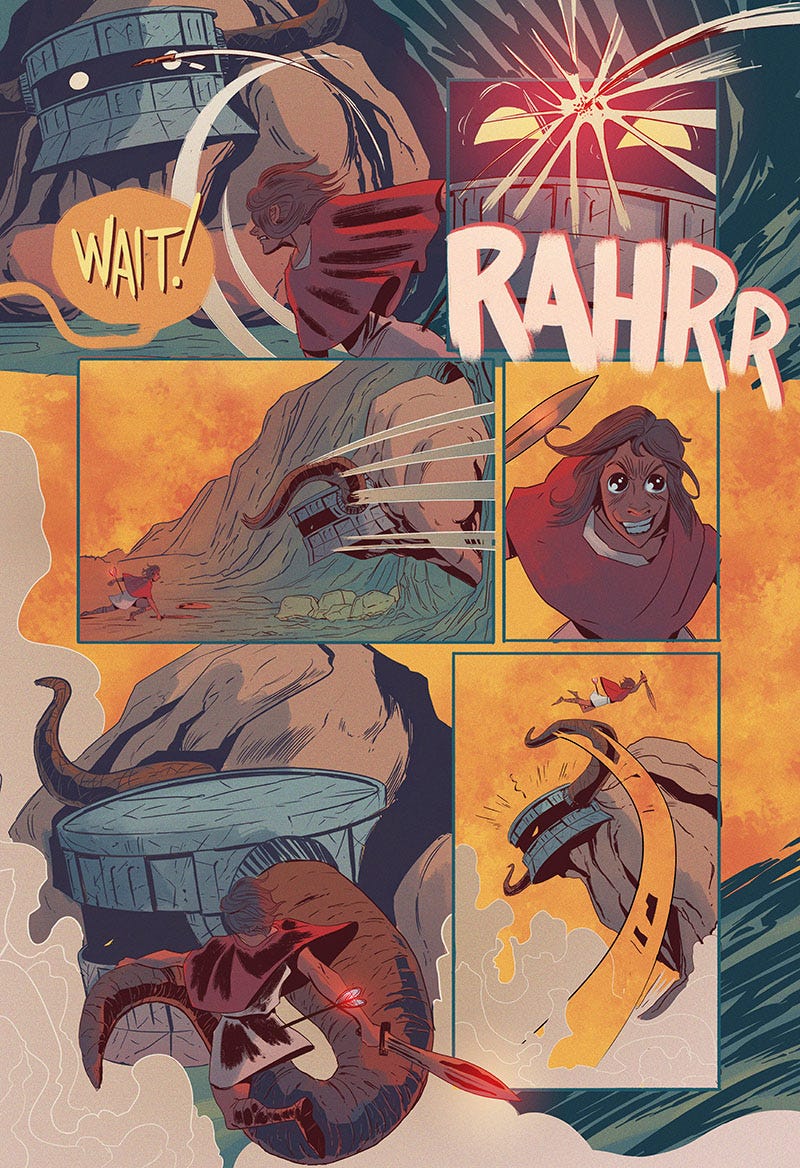
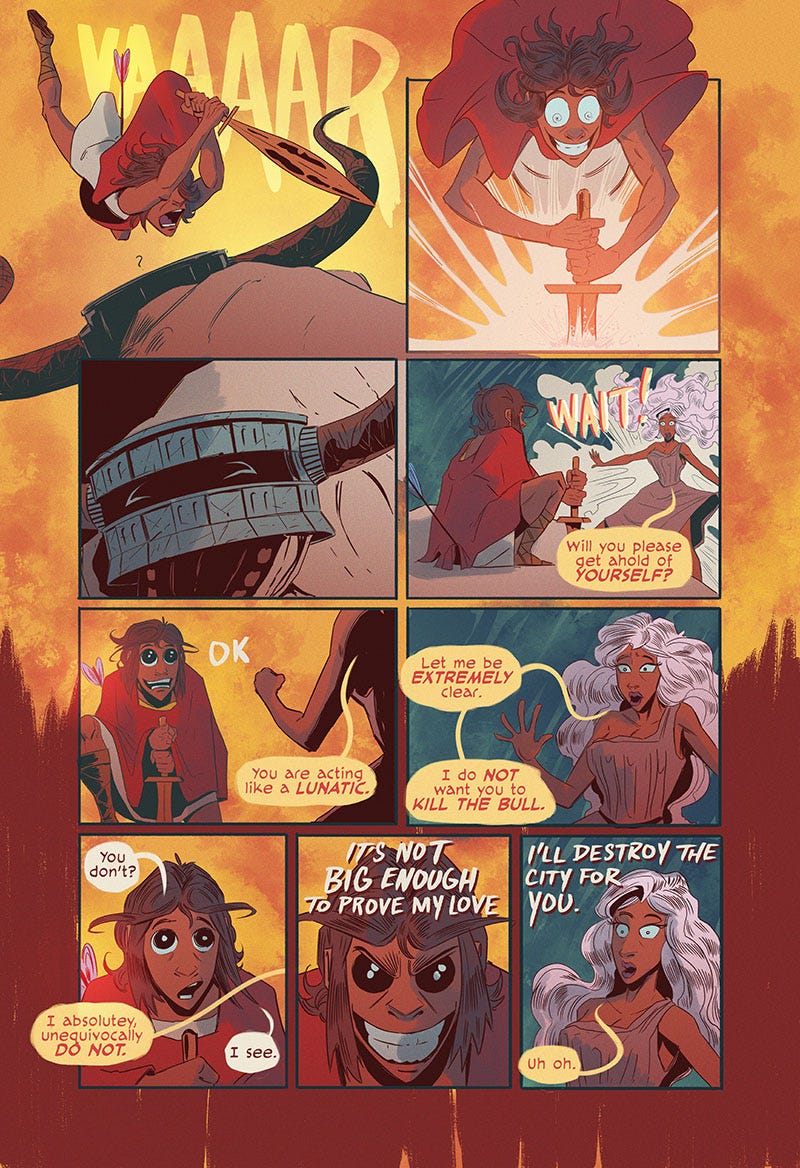
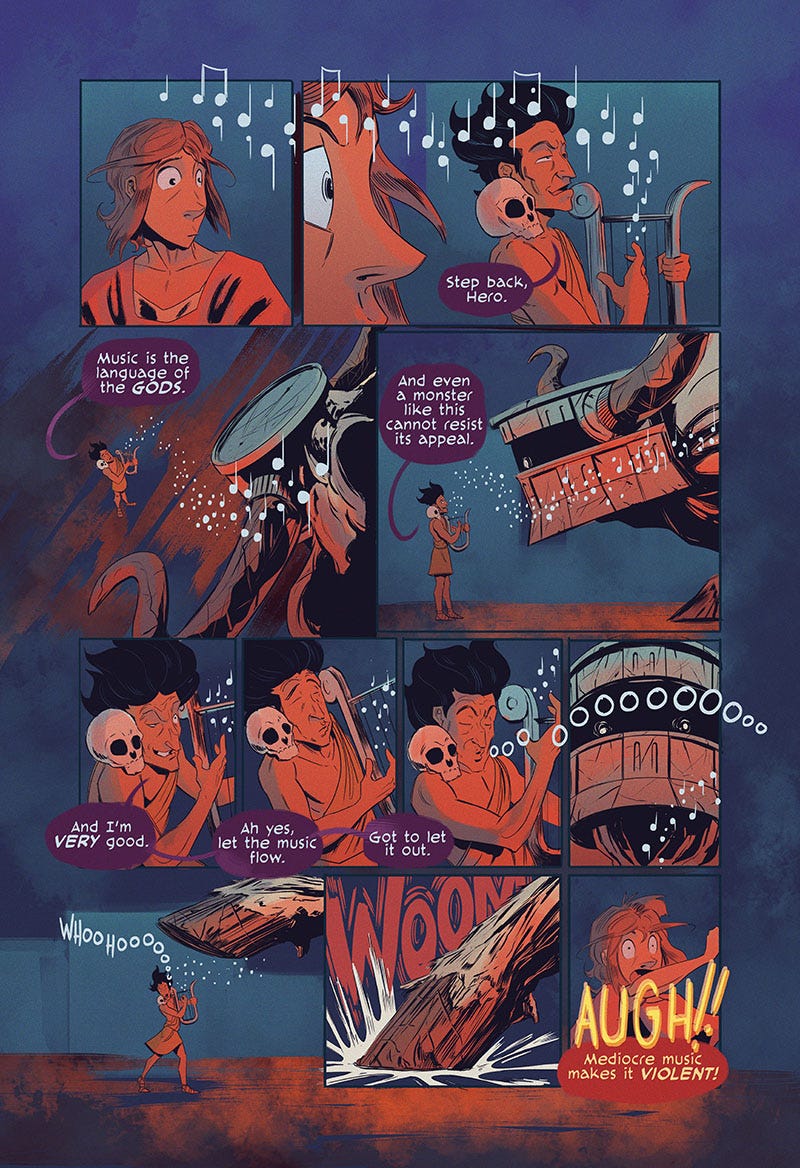
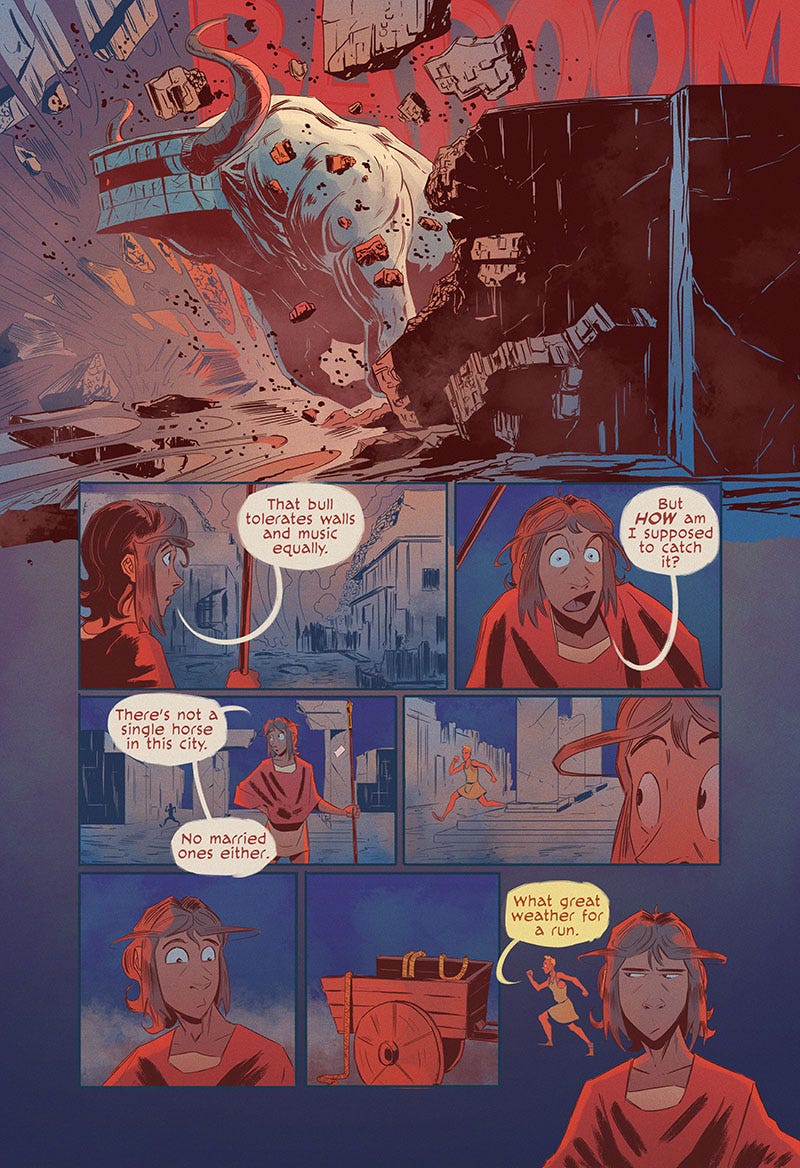
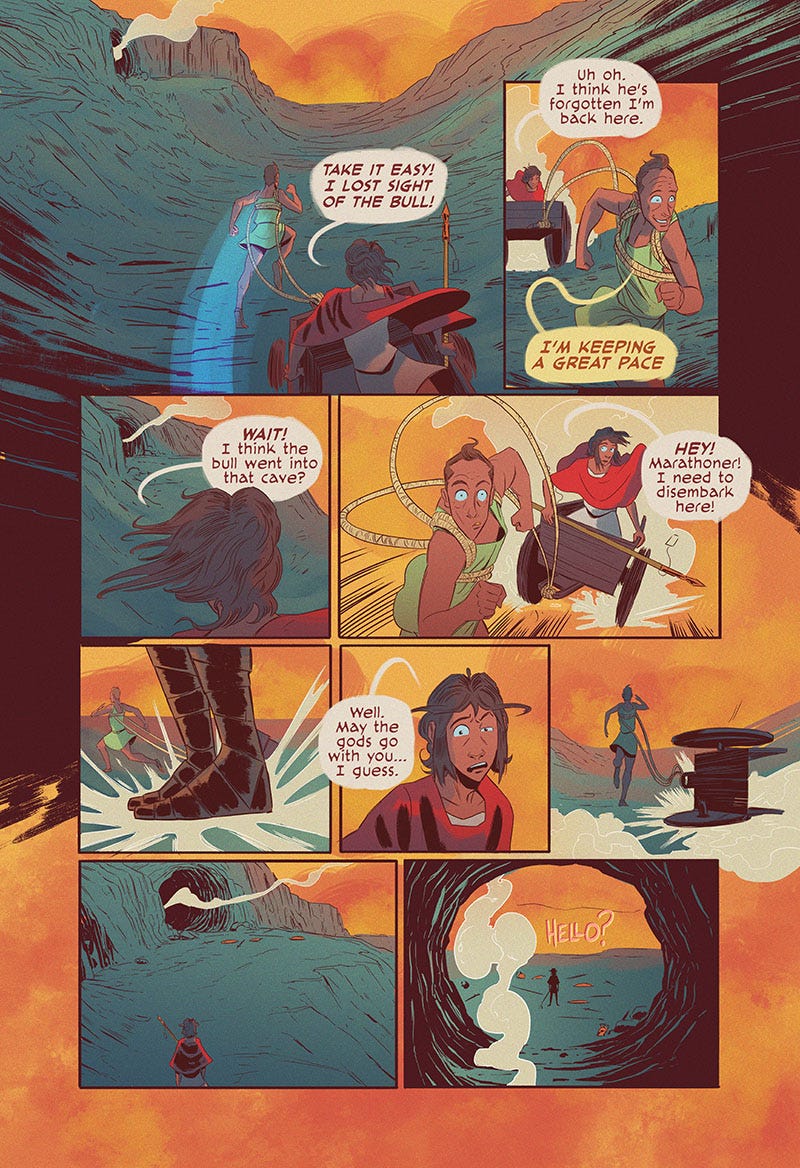
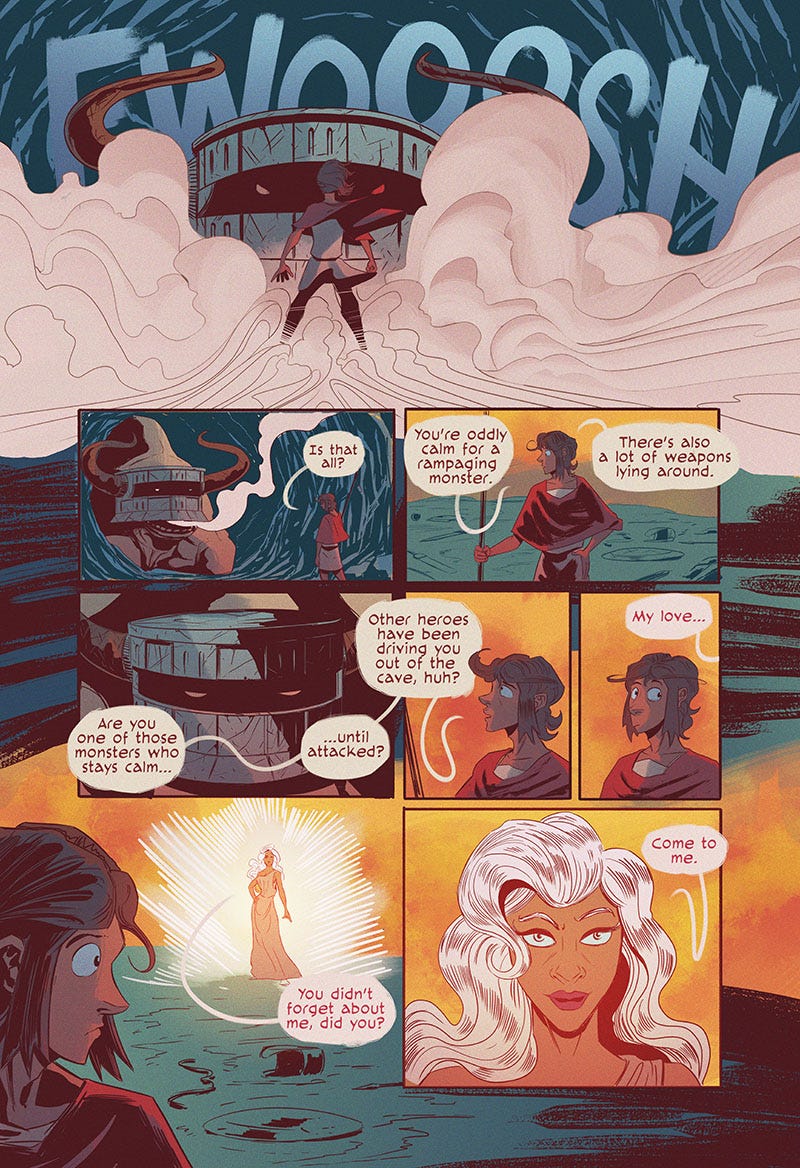
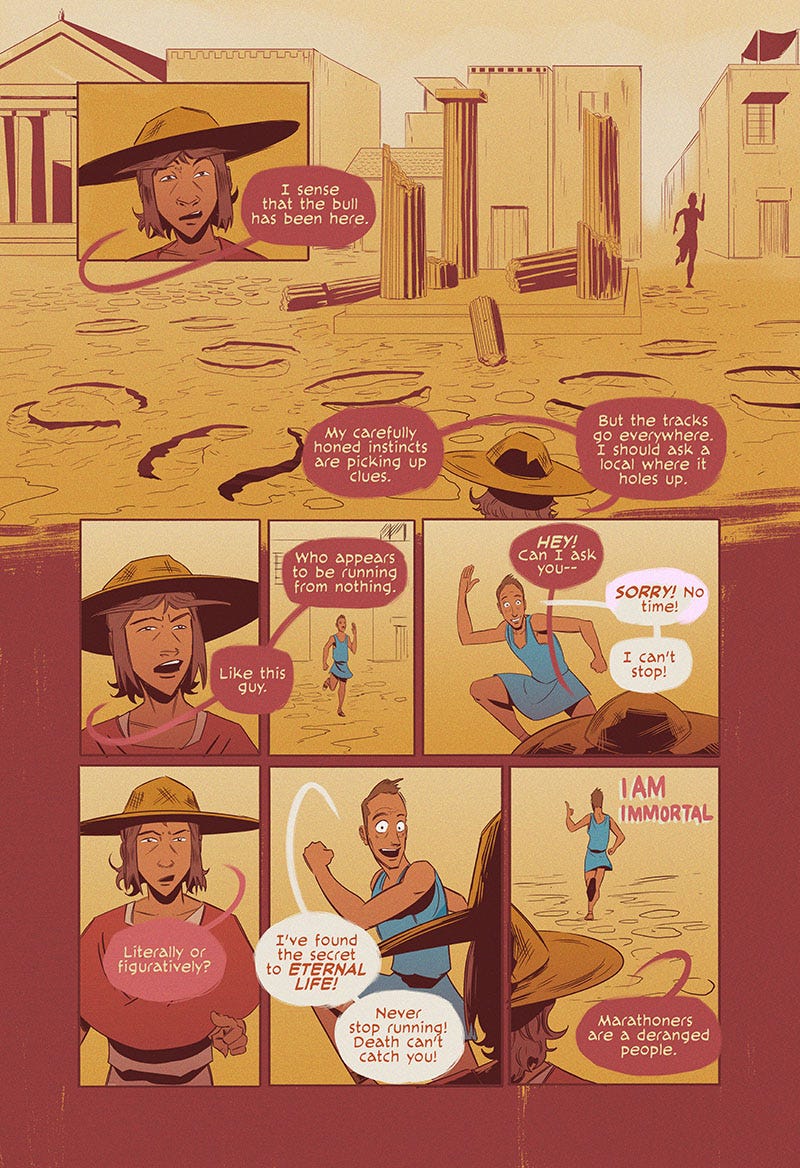
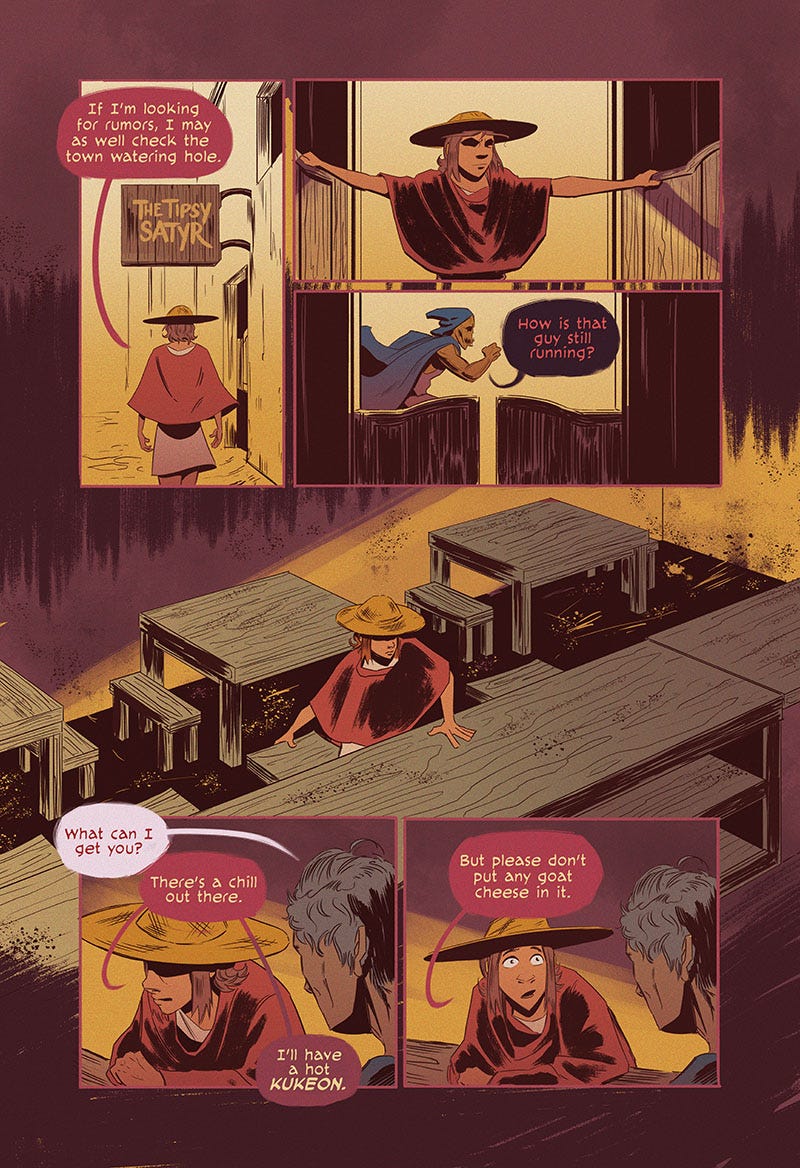
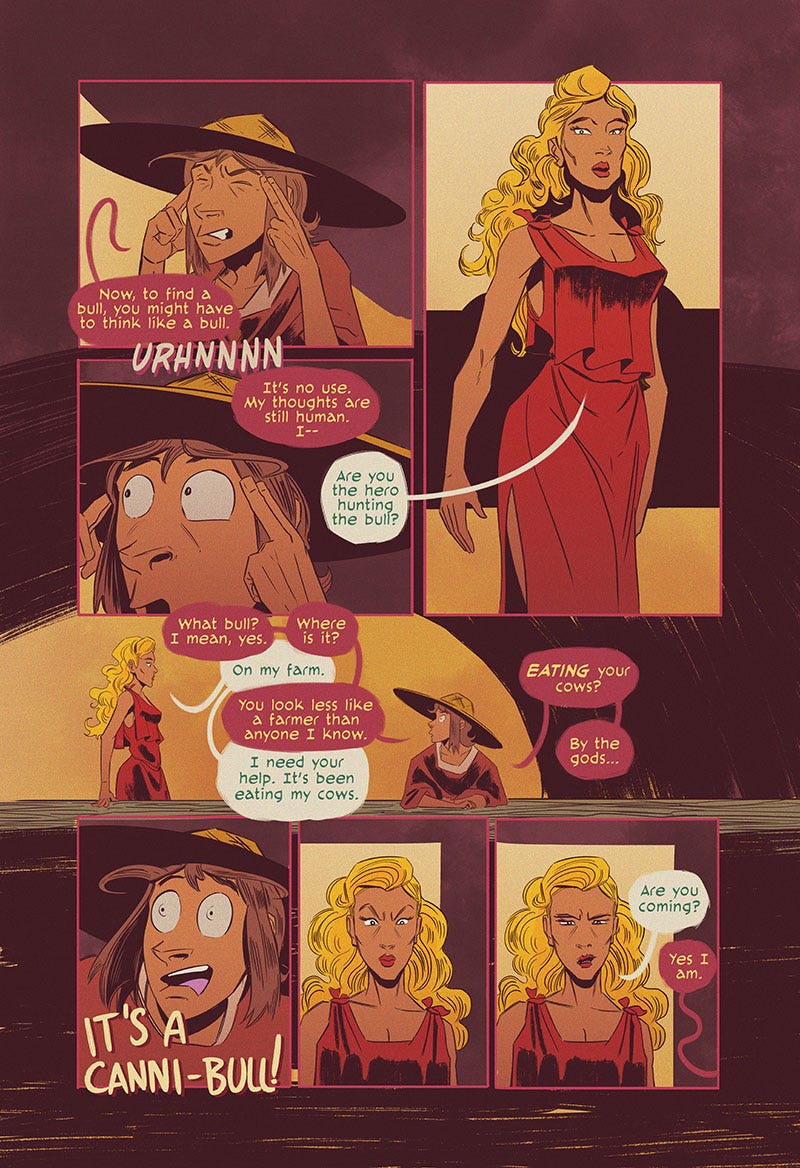
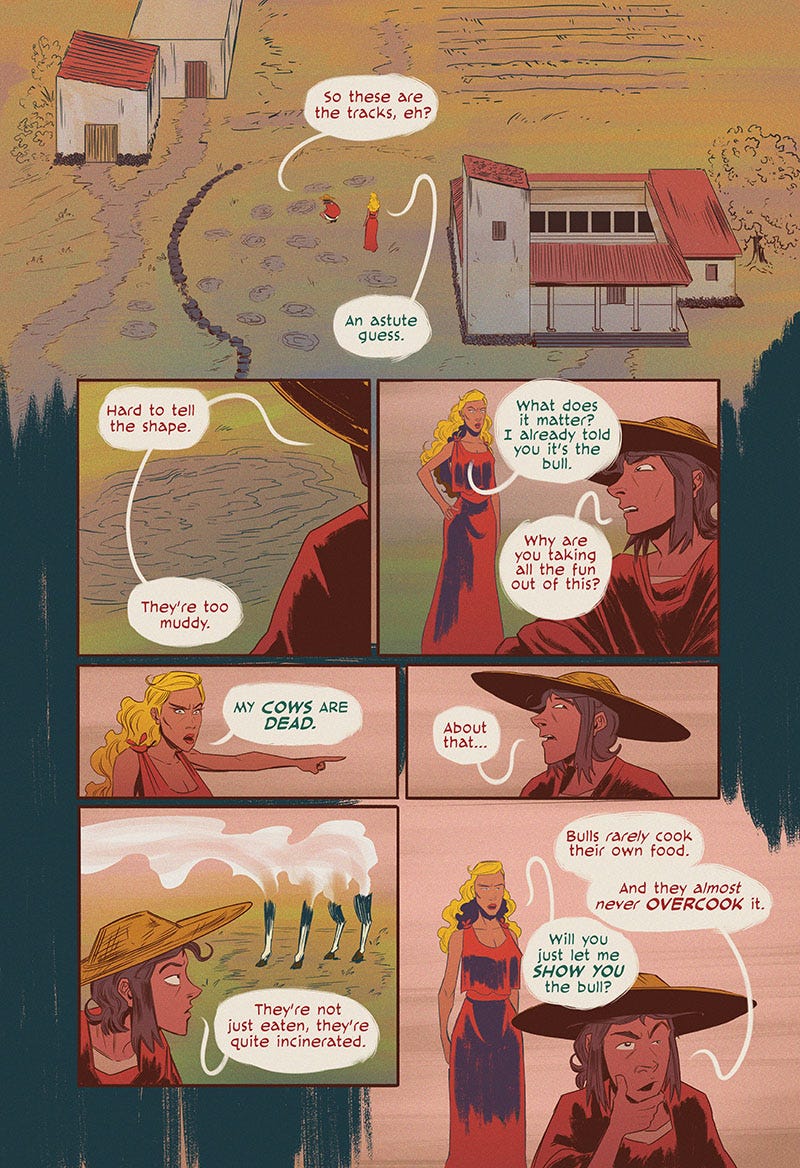
Theseus Vol. 3 is well under way. I’ve completed the first chapter (Chapter 9 overall) and have moved on to Chapter 10. But first here’s a slate of finished pages.
Behind the Scenes
Finally, I’ve gotten to think ahead and start drawing Minos and Ariadne. I thought about their designs for a long time, and did far more research into Minoan clothing than was likely necessary —including quite a bit of work adapting a Minoan woman’s dress to a PG rating. I did my best to honor it and…not alienate my audience.
With Minos himself, I built his costume from Minoan sources, but also packed a massive, dual-layered literary reference. I always fear laying that stuff on too thick so only time will tell if I made it obvious or excessively subtle.
Other Stuff
It occurred to me that it may be fun to, once in a while, throw in something I found that I really liked. This week it’s a typeface designed by Daniel Mitsui. I have no connection to the project, but I love blackletter type and I think this is faithfully designed.
Illuminated manuscripts and typeface designs have something in common —they don’t get enough appreciation. This is a great merger of those two worlds.
Finally, I don’t think I’m able to provide any details yet, but I’ve signed a contract with a publisher to produce a graphic novel that is outside my usual fare. It was a rather sudden opportunity, and hopefully I’ll be able to share more about it before long. Suffice it to say that production on the new graphic novel will affect the production of Theseus in the spring, but I’ll keep this list updated as we good forward.
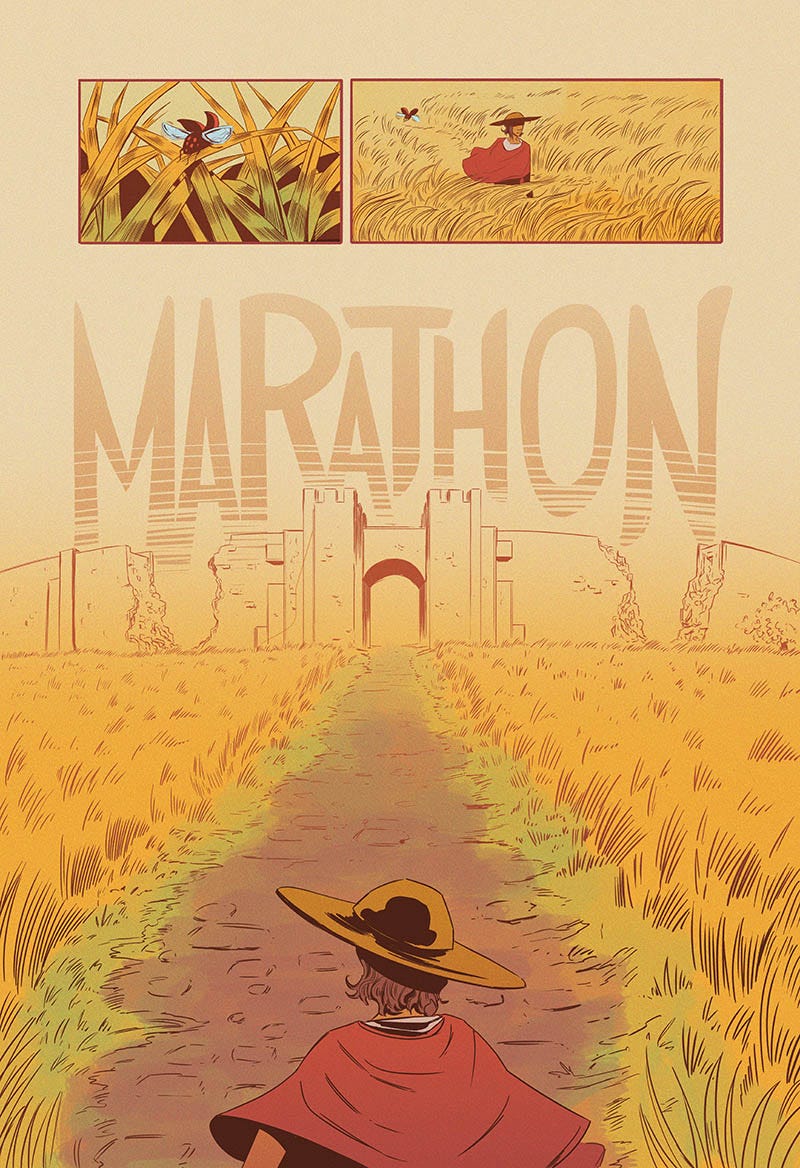
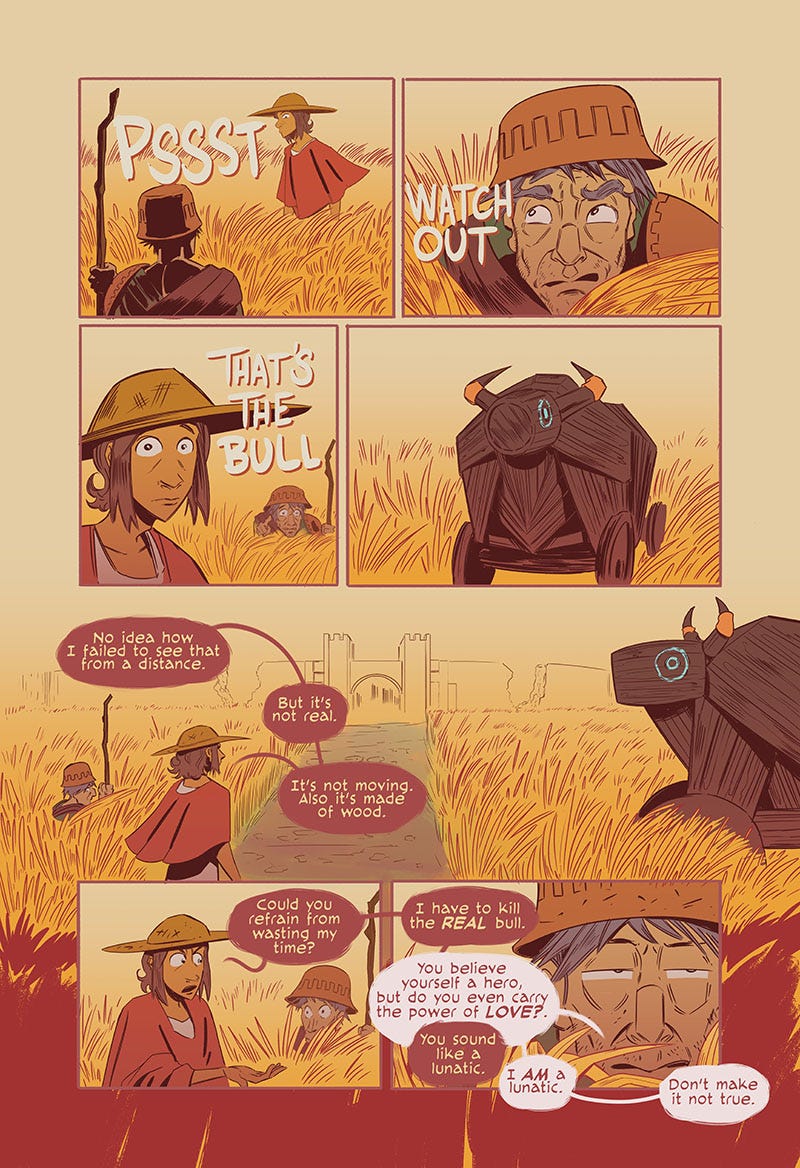
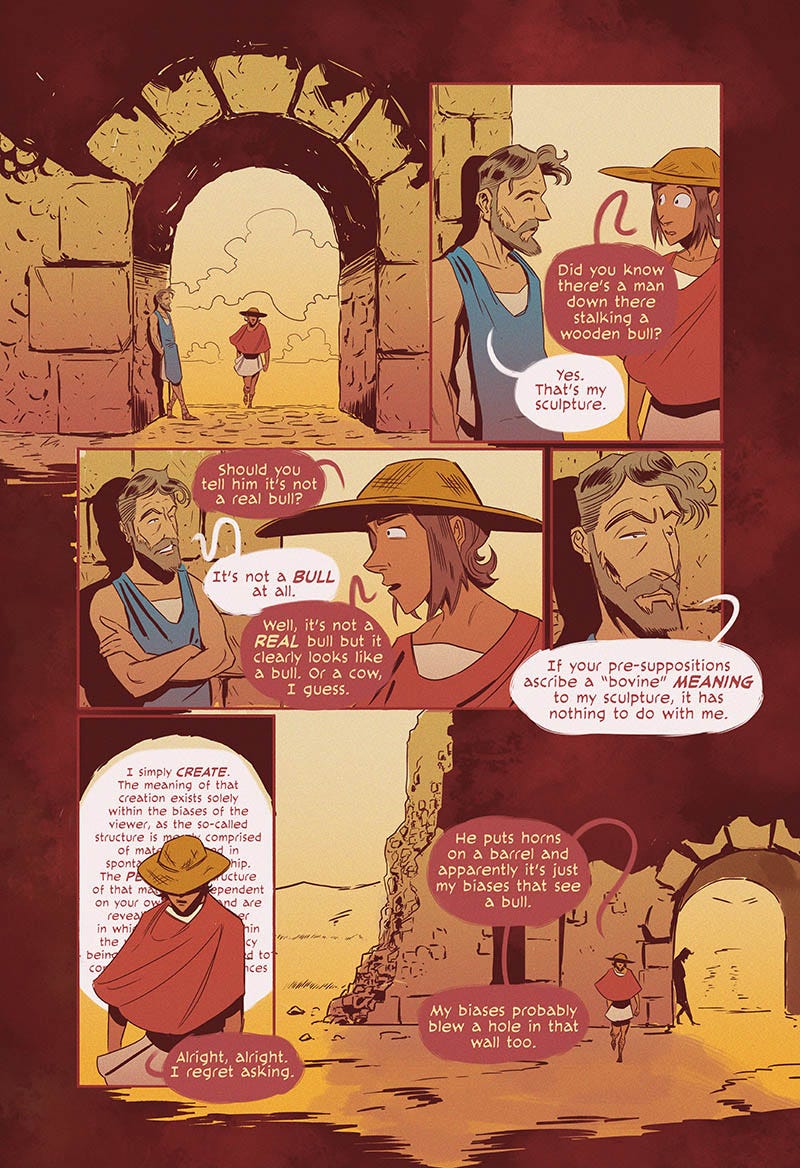
These pages are really the platform for the entire final book. We introduce the backstory, the stakes, and the decisive moment when Theseus chooses to take on this task.
Volume 3, unlike Volumes 1-2, is not episodic. For this one, in order to cover the story of the minotaur effectively, I felt it was best to do a continuous arc —though you will see that each chapter is thematically separated.
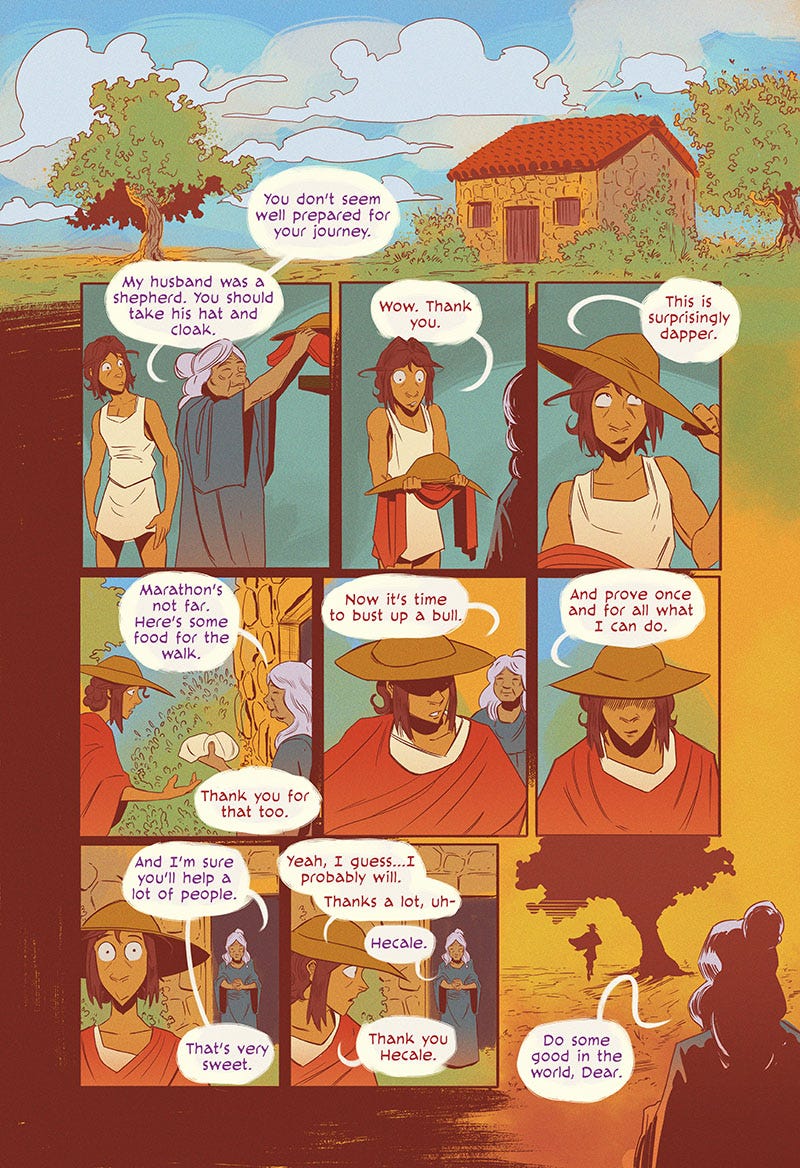
I confess, I started this series as a lark. But the further I went in, the more I saw an opening to treat this comedic version with a little bit more reverence than I originally intended. And that meant serious moments started to naturally come up as Theseus began to grow as a character.
This, as far as I’m concerned, is a watershed moment.
Other Work
I’ve been sinking a lot of time into a second project, trying to wrap it up this fall. Here’s a page featuring a medieval helmet and a wandering moth.
Don’t forget you can pick up more copies of Theseus Vol 1 & 2 at carthageproject.com. Get that Christmas shopping done early.
Also you can see me selling wares and signing books at the Cleveland, TN Geekster on September 23.
I’m actually in the midst of another, smaller, 40 page project. I’m consistently drawing on it as well, intending to finish this fall. Here’s a sample page.
I’ve also been invited onto another major project…we’ll see how that goes and I’ll update when I can. In the meantime, Theseus Vol. 3 remains my primary work, and I hope to wrap up the story in the next year.
Thanks to all of you for your help and support over these years thus far. The semester begins for me soon, and I’ve spent the last couple of weeks tied up in meetings and paperwork. But the illustration work continues.
I’m currently about to wrap up chapter 9, and I have greatly enjoyed this ink work (a little spoilery perhaps, so venture at your own risk).
Chapter 9 is nearly finished, but you’ll also noticed that this new volume is getting a more textured and value-driven approach. And that’s on purpose. I felt a need to grow the style of Theseus into something unique. And this followed naturally from the work I’d done on the previous volumes. So, I say, let it evolve.
Other Work
I have a new Youtube video articulating the details of Gregory Fromenteau’s work (sample seen here)
And then I also wrote an article on Thomas Cole’s 1830’s Course of Empire paintings, which you’d probably seen erroneously representing the Fall of Rome (it doesn’t). Instead, it represents how our survival instincts and problem-solving abilities lead us to destroy ourselves. Very chipper. Check it out.
Lessons in Human Nature from Thomas Cole's Course of Empire
A series of five 19th century landscapes that tell us about ourselves and our destiny
Read hereClose
This past week, I was thinking about Thomas Cole’s Destruction, which I see frequently used in articles and on social media attached to conversations about the Fall of Rome in the late 5th century. You’ve probably seen it before.
The only problem —this isn’t Rome at all. That’s certainly not the Tiber, and both that mountain in the distance and the colossal marble statue of the warrior are utter works of fiction (although Cole may have been referencing both the colossal statue of Nero that gave the Colosseum its name or the statue of Constantine that crumbles (and likely had a bronze torso).
J. Holt's Newsletter of Illustration and Myth is a reader-supported publication. To receive new posts and support my work, consider becoming a free or paid subscriber.
But I won’t further belabor the point with images of dismembered Classical statuary. The painting mentioned comes from the series The Course of Empire, painted by Thomas Cole (originator of the Hudson River group that included later artists I love like Albert Bierstadt and Thomas Moran) in the mid-1830’s. Intended as a narrative series, these five paintings offered a warning concerning American economic, military and geographic expansion. So let’s begin.
The Savage State
The first painting in the cycle is called The Savage State (note that distant mountain with rock perched atop —it's a main character). The relationship between humans and nature is asymmetrical here —nature has dominion over man.
The sky is reminiscent in scale and motion to J.M.W. Turner's Hannibal Crossing the Alps (1812). Opaque clouds swirl over the top of the frame, creating a canopy over small figures. Nature unfettered, untamed, and an existential threat to human existence and flourishing.
Turner painted a lot of work like this, leaving figures as small compositional elements subjugated to natural force. Cole is actually painting contemporaneously with an older Turner, who dies in 1851.
One significant difference, however, is that Cole’s humans are not cowering against the might of nature, they’re warring against it for survival. It’s important to note that the “Man v. Nature” paradigm that is so frequently mentioned in literature and art is a battle of territory. Man’s fight with nature is to establish a cushion where survival is not the sole preoccupation.
The second painting is The Pastoral State. Here, the weather has receded to tranquility. The struggle between the two parties of humanity and nature has reach a truce. Human beings have established a toe-hold within nature's domain and live in equilibrium with their environment while pursuing work and leisure. The mountain in the background, which is a constant throughout the series, is now visible around its base (whereas in The Savage State clouds obscure any approach to its slopes). I take this as the opening to higher thoughts and spirituality. Once our task of survival is not our sole preoccupation —room is left for transcendent concerns.
Such as you see in these detail shots, study, spirituality, leisure and work are now available to the population as a place to spend time.
The last of these images shows a tremendous fire contained within a stone ring. The perfect illustration of taking nature’s destructive potential and harnessing it to the control and benefit of the population.
The entire paradigm of The Pastoral State is interestingly similar to the kind of "cooperative relationship" you see reflected in rural Japanese society, where the "satoyama" is a village nestled by a mountain and the villagers live in harmony with nature.
Photo by Matthieu Zellweger (2019)
For the Ghibli fans out there, the exploration of this concept of equilibrium is explored in My Neighbor Totoro and its dissolution is explored in Pom Poko.
The third painting is Consummation, wherein nature is all but subdued. The shores of this river are covered with architecture, and the only remnants of the preceding natural landscape are the peaks of distant mountains. The shift in dominance is complete. Man has conquered nature. The pastoral state of the prior painting may have looked idyllic and balanced, but maintenance is not a human compulsion the way that tool-building and problem solving is. Satisfaction and gratitude are only a natural human reaction when we have just emerged from bad circumstances to better ones. Imagine walking into a warm house from a long walk on a frigid day. Immediate satisfaction, but how long do you remember it before a new problem to be solved emerges, promising an even more customized experience of your day or larger life?
This is how magnificent empires are built. The slow conquest of new problems. Even if those problems are increasingly small when compared to the original preoccupation of survival. Satisfaction and gratitude will hinder or even halt progress towards domination. Learning to forget the previous success and treat smaller problems as just as serious as the previous ones is the way that cultures propel themselves forward to dominion. Consummation shows the peak of that dominion.
Now the sky is swirling again. Fire that had previously been contained and controlled is now controlled by one party at the expense of another. This is Destruction, the penultimate painting in the series. The ability to wield nature means that we also have the power to weaponize it. Our ability to forget satisfaction and treat new problems as just as serious as old ones means that with external enemies defeated, the differences between us feel severe and pronounced. Once the differences between us are the most visible and pressing problems to solve, we will take whatever means is necessary to resolve them.
This is, as seen in the painting, at our own expense.
A frail, makeshift wooden bridge, supported by a dead tree, supports the rampaging armies charging over the last link between the opposing riverbanks. Its function is now to reach the enemy. And soon this river will again be an impassable barrier to man. That detail is so fascinating to me because what human construction more fundamentally expresses communal victory over nature like a bridge?
And the headless statue, wielding a broken buckler and with the sword lost from his arm —urges us mindlessly onward.
Then, Desolation. The final painting.
The stone remnants are the skeleton of the previous empire. And with creeping vines and calm skies, nature slowly reclaims. Patient, it lies dormant during human dominance and then reasserts itself through endurance rather than strength.
The Savage State depicted mankind in the throes of challenge. For their own survival, they competed with nature to assert their own will.
The Pastoral State represents the culmination of that effort and its success.
Yet Cole's paintings offer us a perspective on human ambition that suggest it is ultimately self-destructive. The instinct to fight against extinction may prevent us from a natural state of contentment. There's always a new problem to be solved, and those problems are evaluated not by the standards of our ancestors but of the more comfortable environment they built for us.
And so our differences become more pronounced until we cannot bear them, and are willing to destroy even the comfort and success that gave us the luxury of noticing those differences.
Humans want more, and better. It's in our nature. How we navigate and tame that drive may, according to Cole, the difference between satisfaction and self-destruction on a tremendous scale.
J. Holt's Newsletter of Illustration and Myth is a reader-supported publication. To receive new posts and support my work, consider becoming a free or paid subscriber.
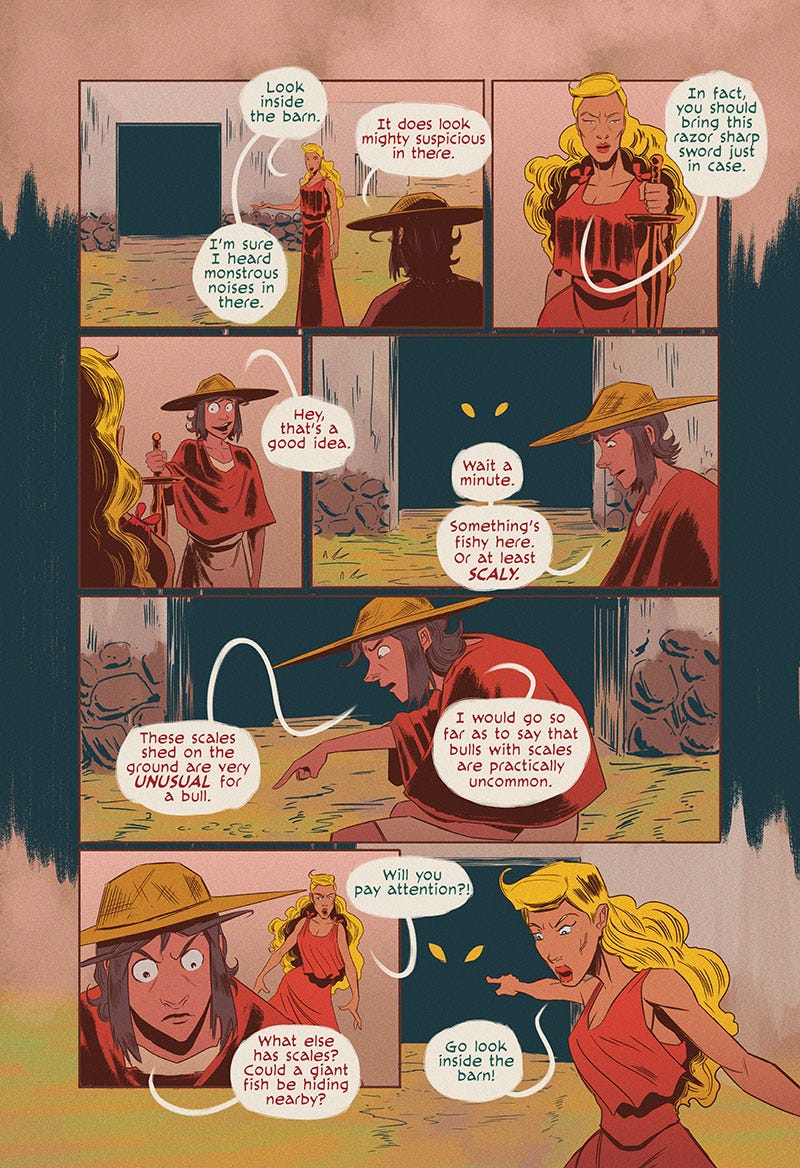
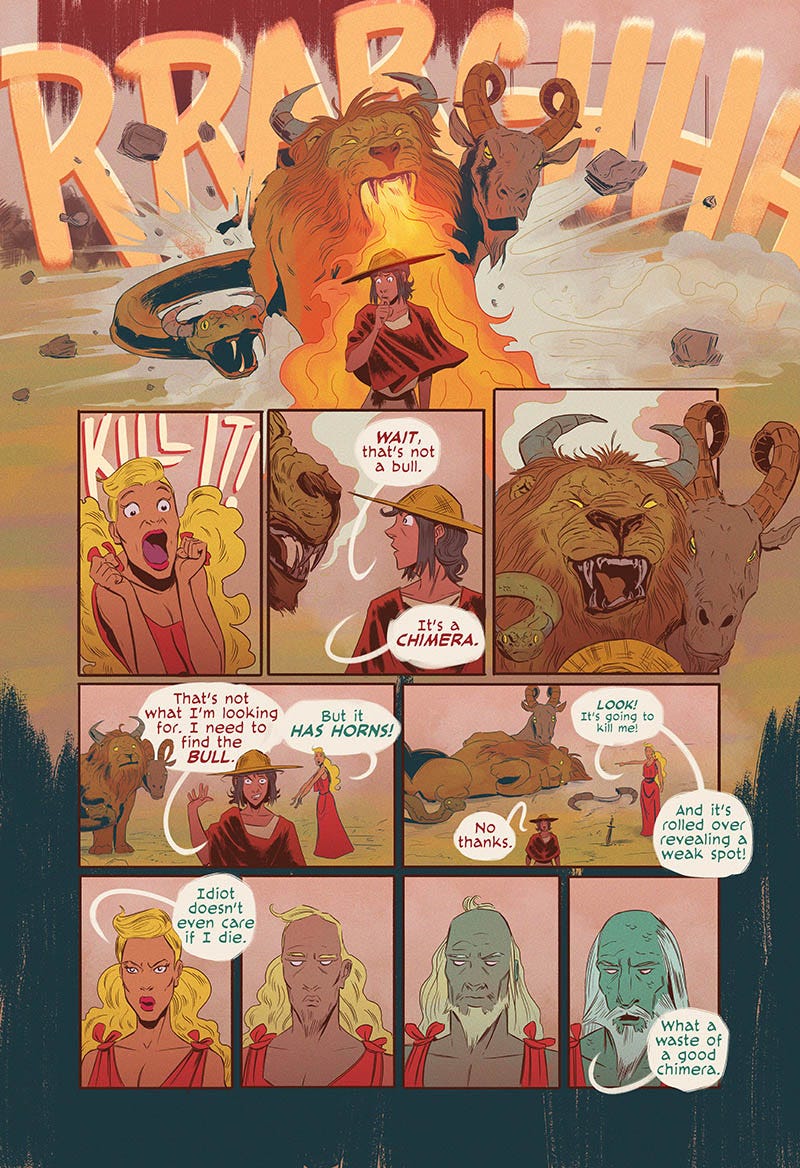
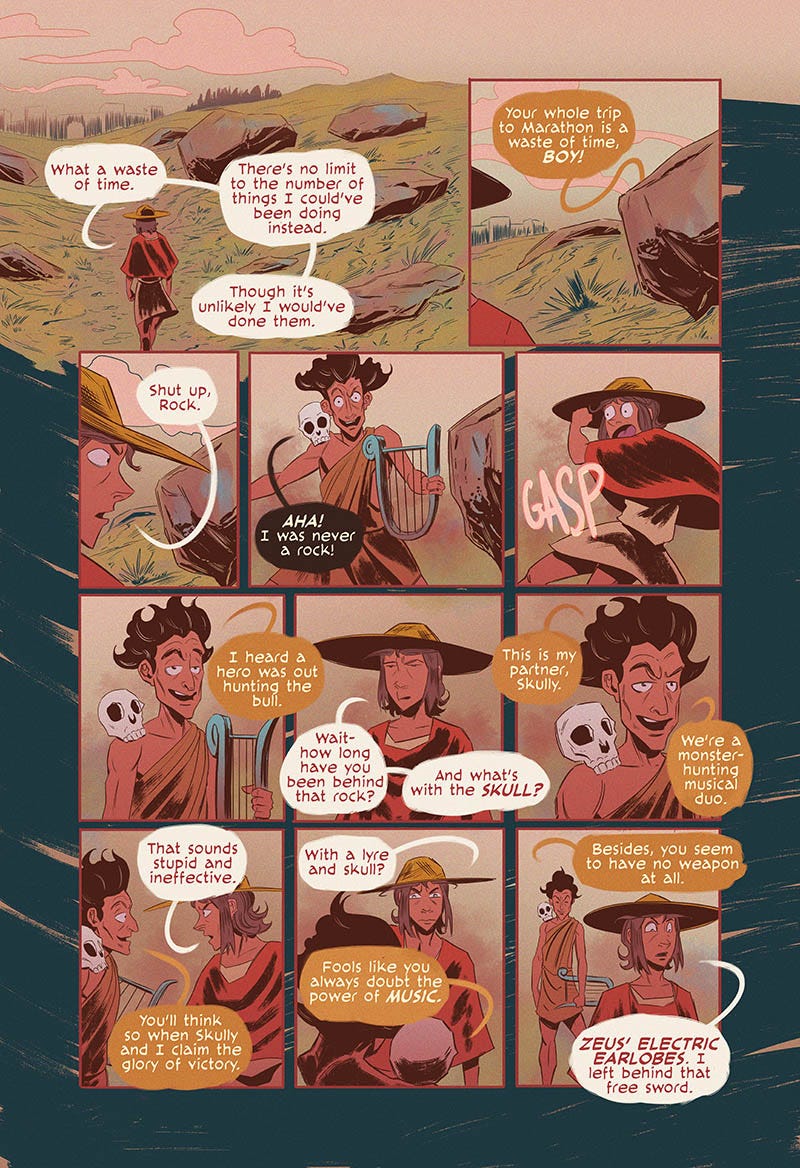
Volume 3 of Theseus begins with Chapter 9. Also, experiments in new drawing styles. Also getting my teeth drilled tomorrow. Has nothing to do with art, I’m just frosty about it (and no doubt frosting has played a role).
This Week’s Pages
Other Work
This week I was experimenting with new styles, and studying the work of various other illustrators. I ended up trying a high detail pencil style and putting colors under it just like I would with typical comic inks.
This is the full illustration.
I really did NOT know what I was doing with the pencil hatching, but the result still worked surprisingly well. Unfortunately it’s too complex for comic pages, but as a pin-up illustration style, I’m rather fond of it.
A full breakdown of the process can be found in this thread.
Volume 2 Available for Purchase
Looking ahead to Christmas and ready to buy books for people to goad them into learning to read? Look no further. Vol.2 is up on the site for sale. In addition to other items like t-shirts.
Here are the ending pages for Chapter, and Volume 2 (I’ll be sending out the Volume 3 opener on next Tuesday.
I also started making short videos breaking down artwork in the form of “Exploration Critique”. I’ve linked those further down.
This Week’s Pages
That’s a wrap on Chapter 8, and Vol. 2. I also passed the third year anniversary of posting pages on July 3. Only about a year left to go and Theseus in general will be done.
Behind the Scenes
This is the 300th page of Theseus (in terms of pure comic pages). Each page takes around 8 hours to complete, so I’ve squeezed in 300 work days since 2020. Doesn’t sound like I work very hard when I put it like that.
This will make no sense.
Other Work
I love talking about art. So here’s the link to the first video (I uploaded on Youtube). The others have not been uploaded to Youtube yet, just Twitter, though I’m working on getting them Youtube ready.
I’m at Heroes Con in Charlotte this weekend. Come by if you’re visiting. I’m selling all my wares.
My wife informed me that Substack started sending out coupons on my behalf (saying it was from me). I have nuked all the settings to root out the mole and I apologize for any who received unsolicited emails.
Here there be pages:
This Week’s Pages
Behind the Scenes
Here’s the best thing I’ve drawn all week:
In reality, I’m working through what we in the business refer to as “being terrible at drawing.” Sometimes these things come and go. You try to draw, but it’s as though you’ve been possessed by a spirit who is unpracticed in the visual arts.
I’m still knocking out pages, it’s just with a slower pace required by increased revision. So I’ve been drawing superheroes to try and loosen up. Like this guy.
Creative blocks are part of the game for anyone who tries to make something from scratch. The cure for it simple: power through. Keep drawing poorly until something gets better (or writing poorly, if that’s your thing). It works the same with a stitch in your side during a run —you can run through it. Of course, once I tried that and a dog bit me. Unrelated.
I’m down to shipping out just a handful of Theseus books that have specialty drawings attached, so since it will cause them no delay as I finish those drawings the next couple of days, I have opened up Vol. 2 for sale at carthageproject.com.
I’m also working on Volume 3, gearing up for a Heroes Con in Charlotte, trying to be more active on social media, and I bought a hat. That has nothing to with anything, but apparently I’m re-entering my teenage “hat phase.” Have mercy on us.
This Week’s Pages
Behind the Scenes Stuff
I started streaming some on Twitch at the behest of other illustrators using my new camera setup. It’s simultaneously fun and the creepiest thing I’ve ever engaged in publicly. So if that’s your thing, you can subscribe. It’s basically just live sessions of me drawing and talking to myself. I do it once or twice a week.
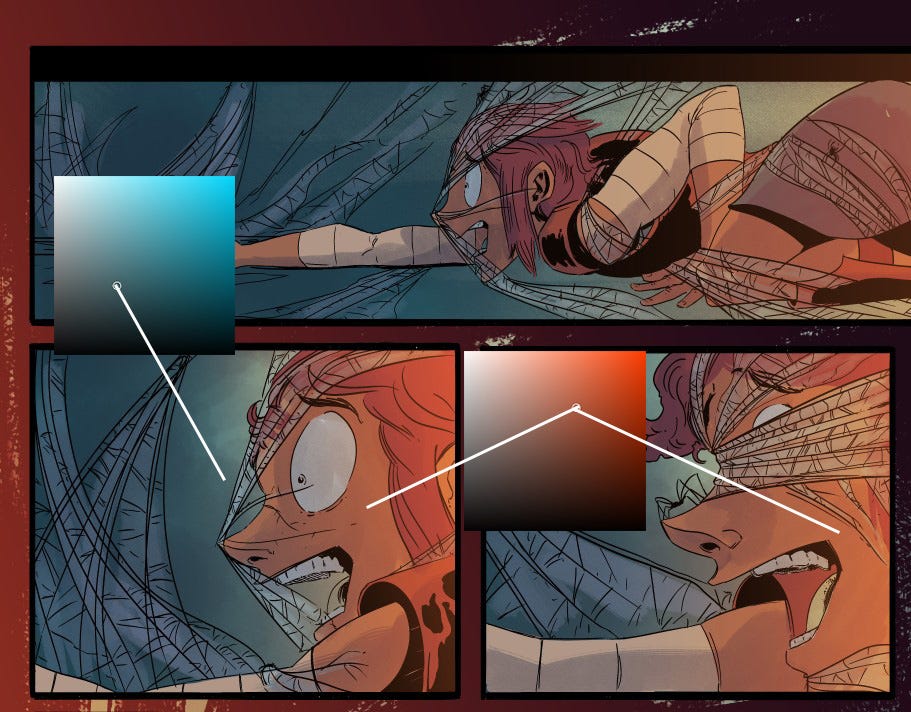
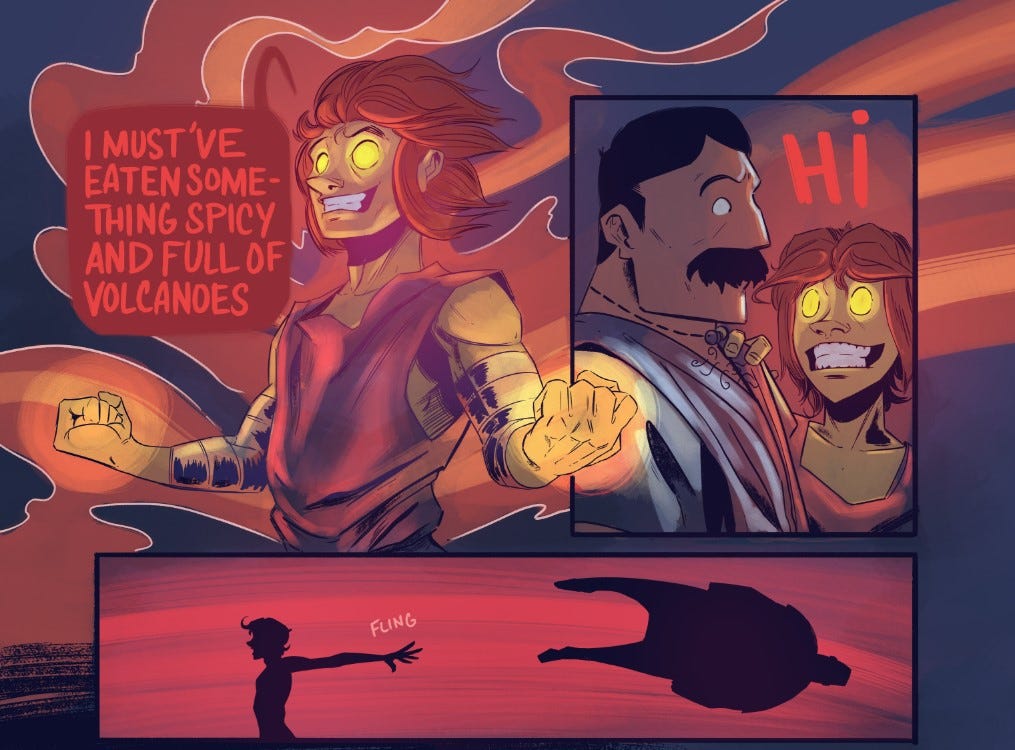
This new style I’m using for Vol. 3 is quite fun (using new ink brushes and an ink wash). Don’t worry…it will still have color. But the underlying values are being established with inks.
Speaking of color, I put together a Twitter thread on how to do color properly. I’m trying to use Twitter well, which means no politics and all comic, art, and humor stuff. It’s easier than you think to avoid politics on the art side of Twitter, but I’ve yet to make a single soul laugh. And yes, I’ve been checking up. Anyway, here’s the gist.
USE MIDTONES instead of highlights for base colors, even for skintones.
LET ENVIRONMENTAL LIGHT CONTROL THE PALETTE, instead of just coloring everything its “local” or natural color (grass may be green, but in shadow it’s much more blue and at sunset its gold. You catch my meaning).
USE COMPLEMENTARY COLORS FOR A BASE, but be flexible with it. It’s a recipe, and there’s room for improvisation. Red and green are complements, but you can throw in all kinds of things if it doesn’t tip the boat.
That’s a few of the main principles. For the sake of space, go to the Twitter thread to see the full list.
In other news, I’ll be at Heroes Con (Charlotte) on June 16-18 selling and signing books. Come see me.
On July 3, we celebrate 3 years of posting the first Theseus page. It’s hard to believe it will all be wrapped up before the 4th anniversary.
Catching up again, but we’re here in summer. For all the backers, I’ve been packing and shipping books for the last four weeks or so, and all but a handful are out the door. So keep an eye on your email for tracking numbers (and hopefully the books have arrived by and large). All remaining books should be shipped in the next week.
This Week’s Comic Pages
Behind the Scenes
I’ve been waiting until summer began to implement my new social media strategy, which emphasizes Substack, Twitter and Youtube. I posted a new drawing session there to test out some new equipment. My last camera system was…contrived. So I bought a webcam. I also began decorating the background with a literal more intentionality.
Though it’s clearly not done. The dinosaur parade needs to be dealt with.
Volume 3
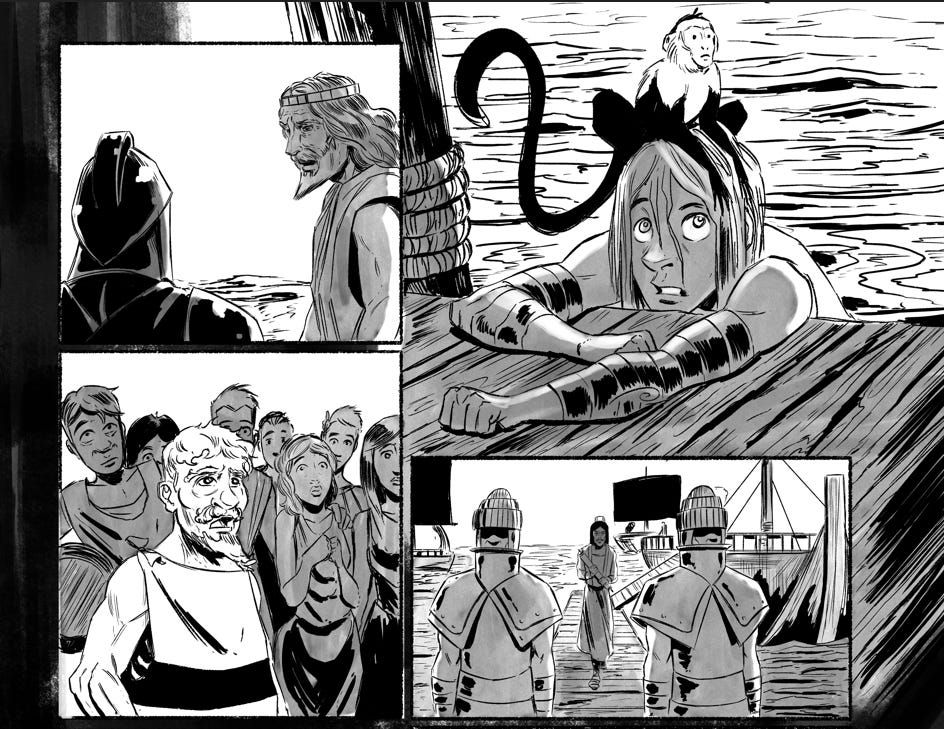
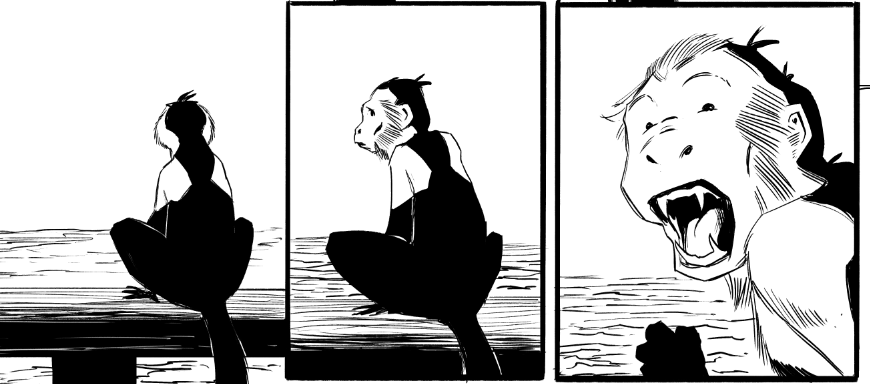
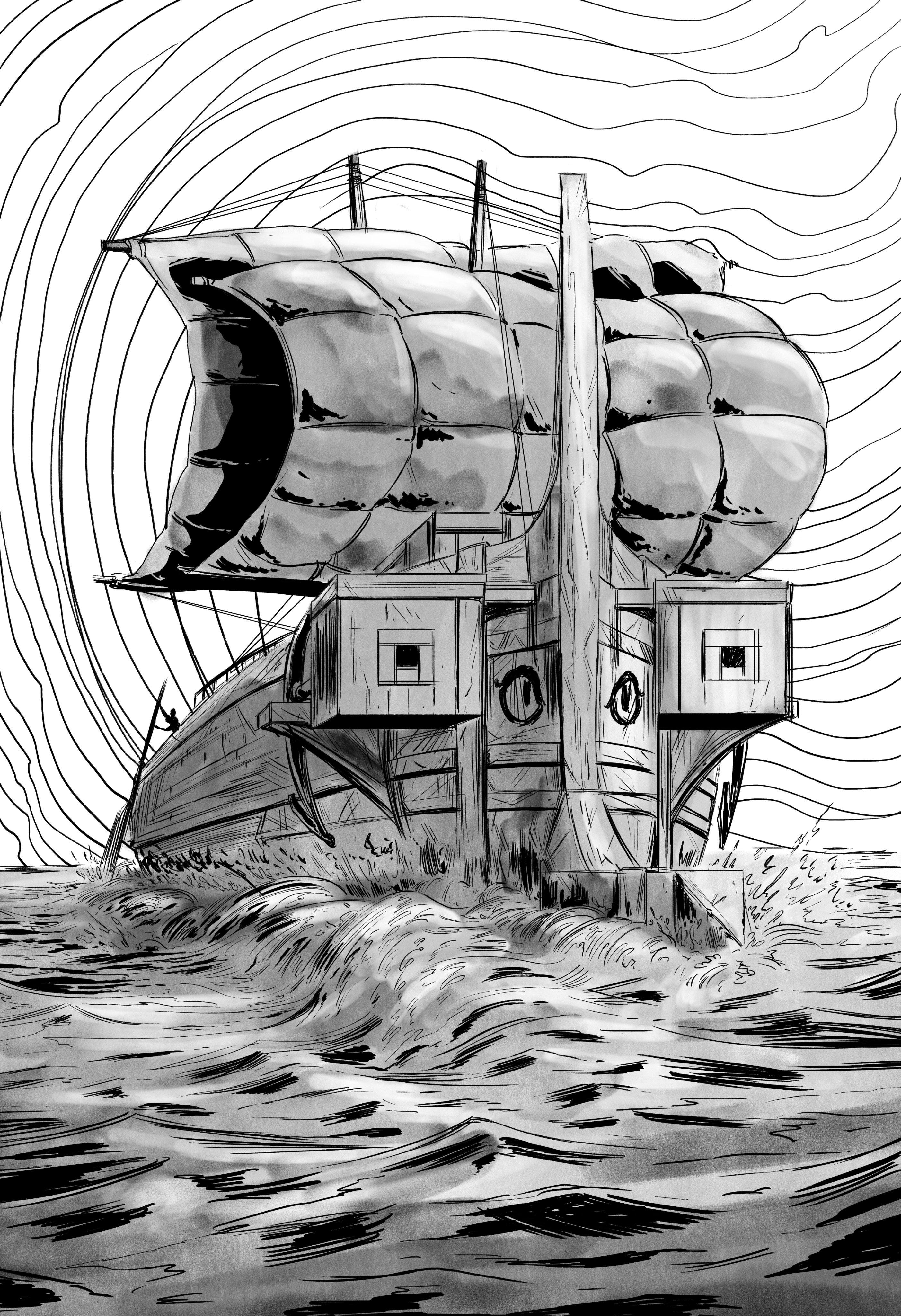
I have started work on Volume 3, which will include a monkey.
Don’t act as though you’re not pleased. There’s also ships.
This current trajectory means that Theseus, the full story, will wrap up in the beginning of 2024, and I’ll be on to a new project.
In addition to its themes of selflessness, Link experiences sanctification and growth in the classic N64 game.
Read hereClose
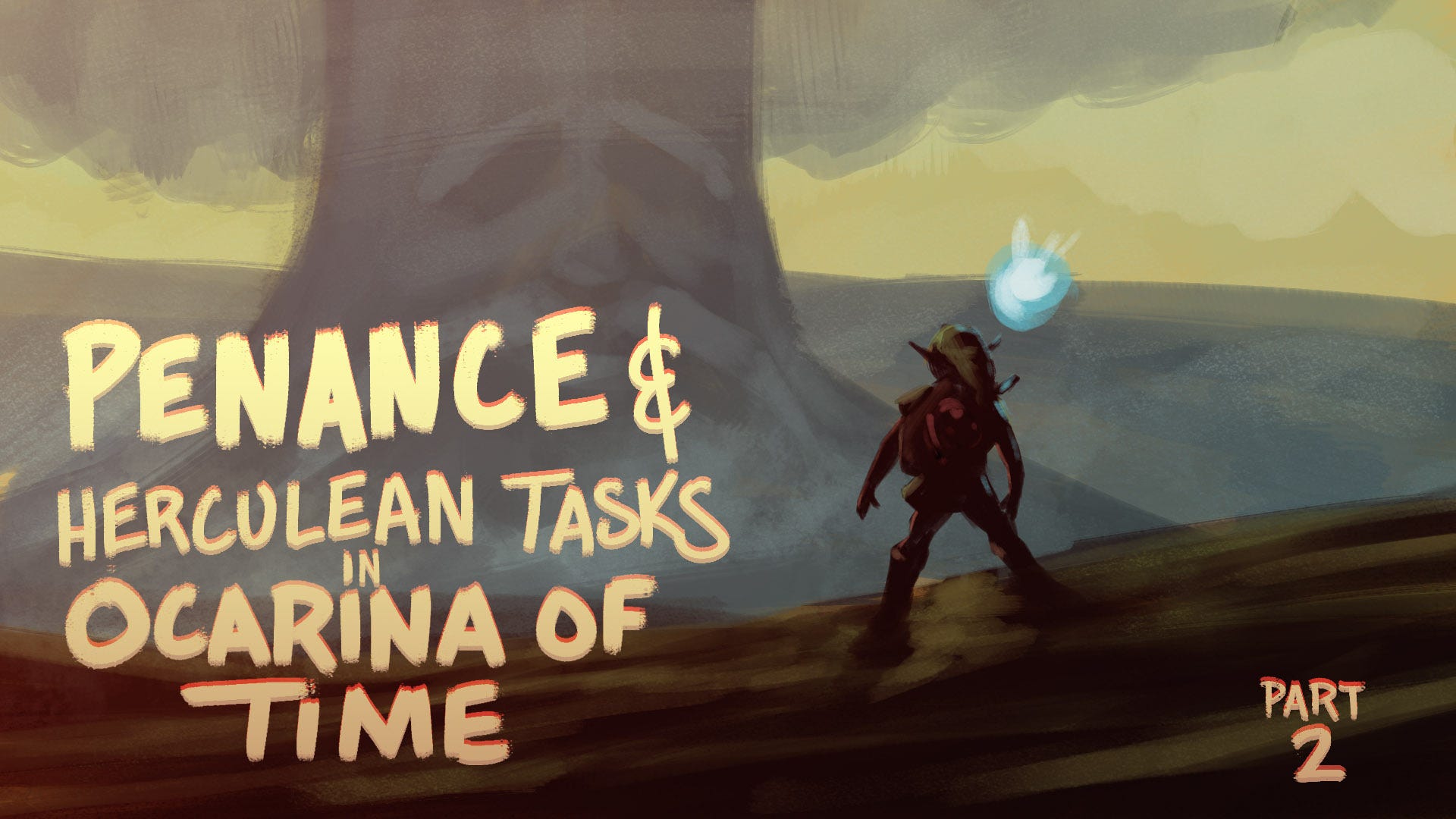
The following is the second part of two discussing angles of interpreting Ocarina of Time. And this is also the first in a biweekly series of essays about art, myth, video games, comics, history, and the connecting philosophies throughout. It is pure self-indulgence and I can’t begin to imagine an audience for it. Note: This should not go out to everyone subscribed to This Week in Theseus, so if that happens, I will fix it.
I am well aware that I have not lived up to my publishing schedule, but now that my son (child #4) has been born and all are in good health, I attempt to resume.
J. Holt's Newsletter of Illustration and Myth is a reader-supported publication. To receive new posts and support my work, consider becoming a free or paid subscriber.
In the last section, I discussed how Ocarina of Time gives us a picture of a selfless protagonist in the vein of the Roman Cincinnatus by virtue of its story as well as its practical game mechanics.
A similar theme takes place in this essay, but I’m shifting my attention to the parallel seen between Link’s conquest of “temples” and Herakles’ 12 labors, and most importantly to the concept of penance in Dante’s Purgatorio. First, let’s hash out “penance”.
There are distinctions to be drawn here that are nuanced and I may not do complete justice to. So let me be clear at the start that my parallel with Herakles is not proposing anything in proximity to a 1:1 ratio.
Herakles is guilty of the murder of his wife, Megara, and his children due to a fit of rage induced by Hera. As a consequence of this heinous crime (the knowledge of which greatly increases the ominous perceived future of Disney’s Hercules movie) is that Herakles must complete twelve difficult labors as a penalty for his crime. This is where the definitions of “penance” are bifurcated and require some reconciliation. Link, as I mentioned in the previous essay, bears no responsibility for the troubles of Hyrule. And even if one chooses to diminish or remove Herakles culpability for his “fit of madness”, the reality is that by his hand a terrible thing occurred. Link is fundamentally innocent of the problems that he needs to solve.
This is where Dante becomes useful. Within Christian theology, penance is a process of sanctification and not necessarily punishment for particular crimes. Penance is curative —its function is to repair the will to harmony with the Divine. In Purgatorio, at the end of Canto 27, Virgil and Dante have arrived at the threshold of Eden at the top of Mount Purgatory, and Virgil informs Dante that “Now your will is upright, wholesome and free, and not to heed its pleasure would be wrong.”
Dante has undergone a reconciliation and harmonization with the source of something true and real. He has lost the ability to desire that which is not holy. This is the penance enacted in Ocarina of Time but with a methodology more closely attuned to the labors of Herakles.
This parallel is easy to miss, but it’s attested by four distinct elements: Link’s acquisition of skills and tools, his shift from Child Link to Adult Link after the first three temples, repeated references by characters to Link’s inadequacy and his growth, and the concept of the Triforce of Courage. I’ll take each of these in turn.
Acquisition
Throughout Ocarina of Time Link acquires new tools in each temple that he visits. In traditional Legend of Zelda form, these tools unlock the ability to progress. A weapon, tool or ability in this setting performs the same function as a key that unlocks a door. This is a very practical mechanic, as it forces the player to navigate the game in a particular order despite the open world setting. But with the open world setting, it offers a bracing emphasis on the inadequacy of the player. The player has the freedom and agency to wander from one area to another, but frequently he will encounter barriers that reiterate the absence of capacity to proceed. Link must be improved before he is capable of progressing.
Character Admonishment & Praise
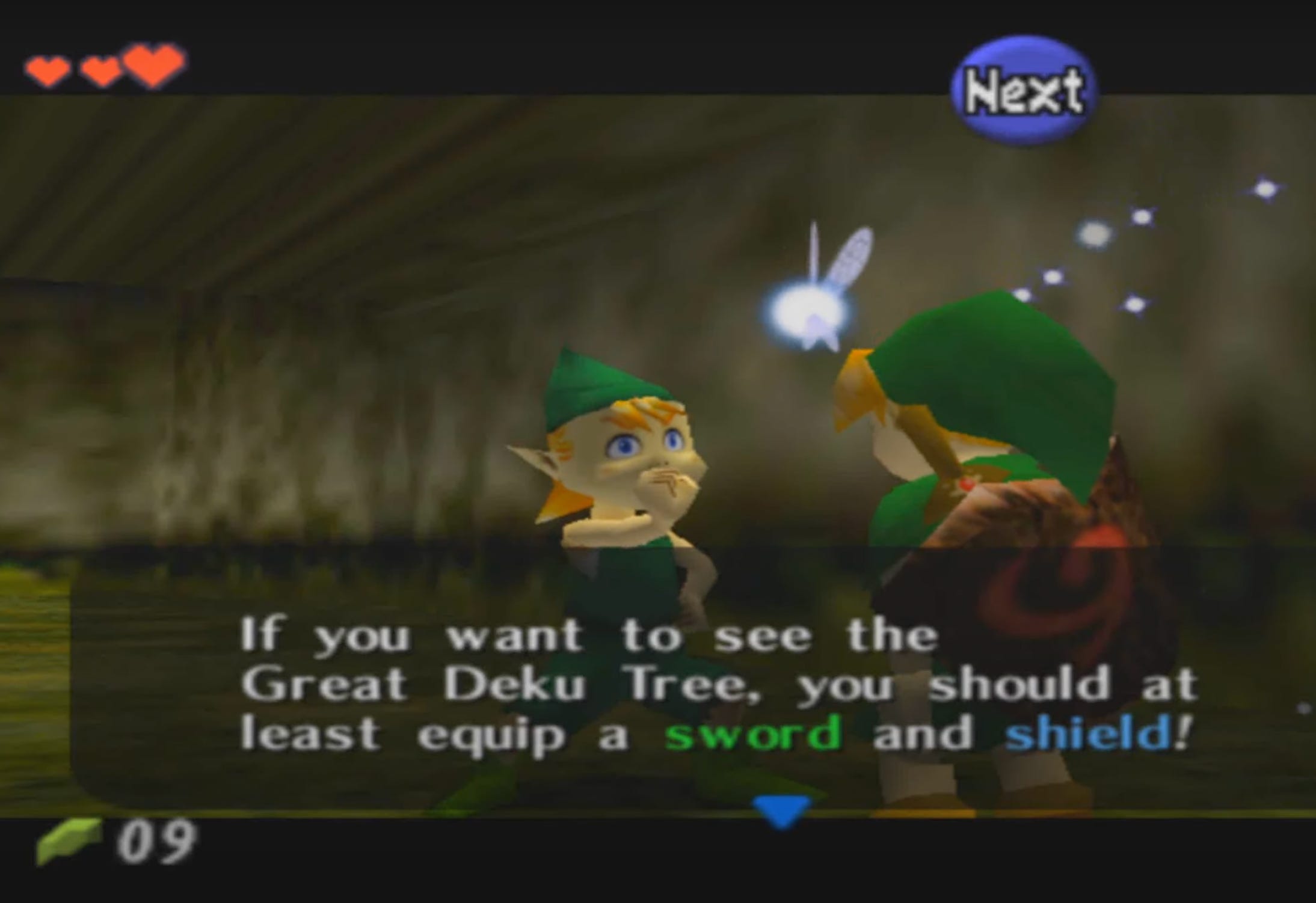
During the course of the narrative, Link encounters numerous characters who will chastise him for his inadequacy and others who will commend him for his growth. The most immediate example of admonishment is Mido during the opening section of the game. Link is awakened by Navi and summoned to the Greak Deku Tree. But if the player tries to access the area where the Deku Tree waits, his path is blocked by Mido who upbraids Link for his lack of sword and shield, refusing entry until they have been acquired.
Once a sword and shield have been collected, Mido grudgingly allows Link to move forward. Similar note is made of Link’s inadequacy by various characters throughout the game. Darunia, the leader of the Gorons, Nabooru in the Spirit Temple, the Zora Princess Rito and many others express misgivings about Link’s size and capacity to help with whatever task lies ahead. And, such as in the case of Mido, frequently their assessments are accurate —at least until Link is in possession of the right ability, tool or song that will enable him to succeed (e.g. the Goron’s Bracelet, the Silver Gauntlets, etc.).
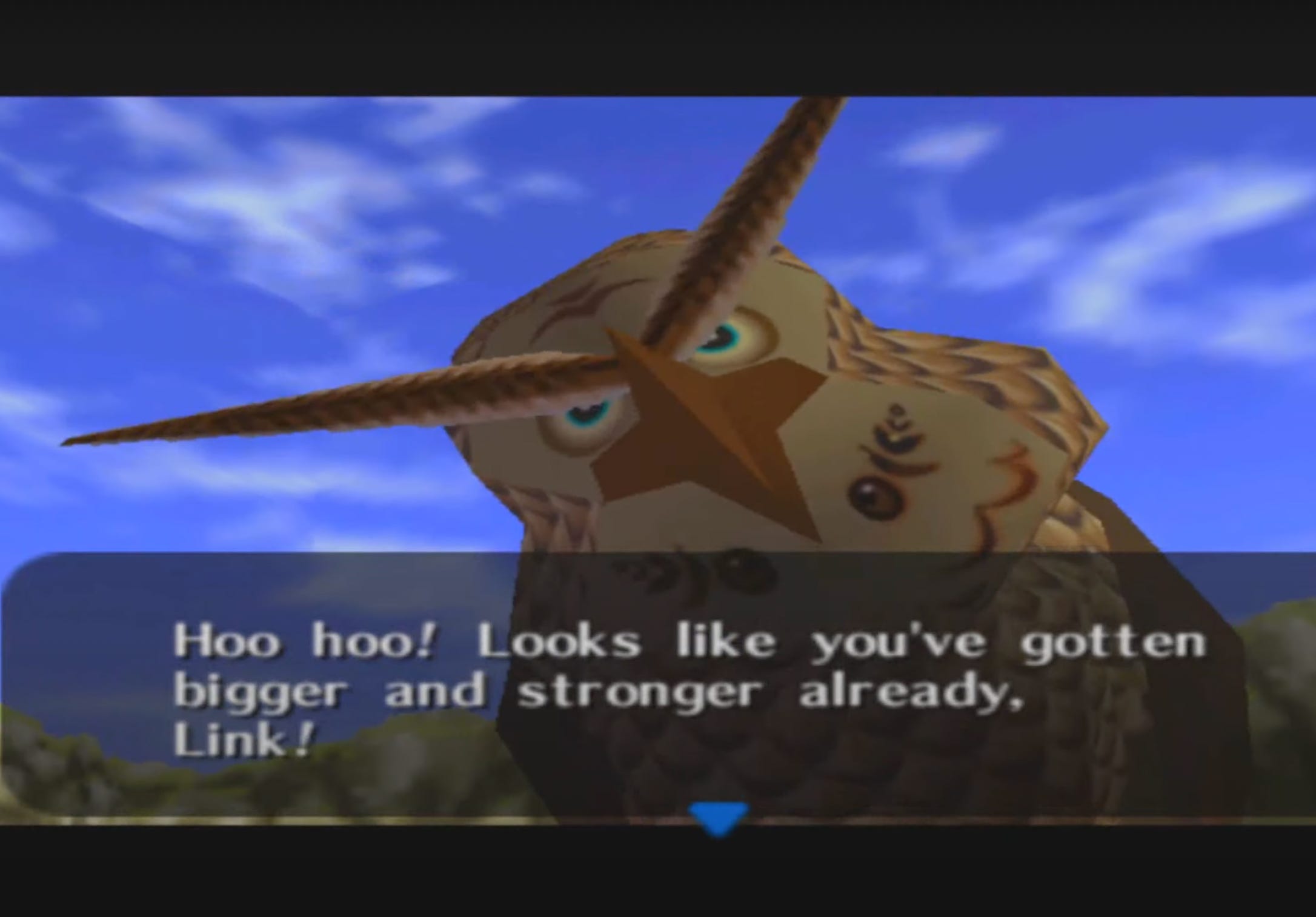
Much more rarely, characters hint at Link’s growth and development, even prior to his transformation into Adult Link. The most obvious reference is found when Link attempts to reach Zora’s Domain and encounters Kaepora Gaebora at the entrance to Zora’s River. The owl claims that Link has gotten “bigger and stronger already.”
The Seven Year Passage
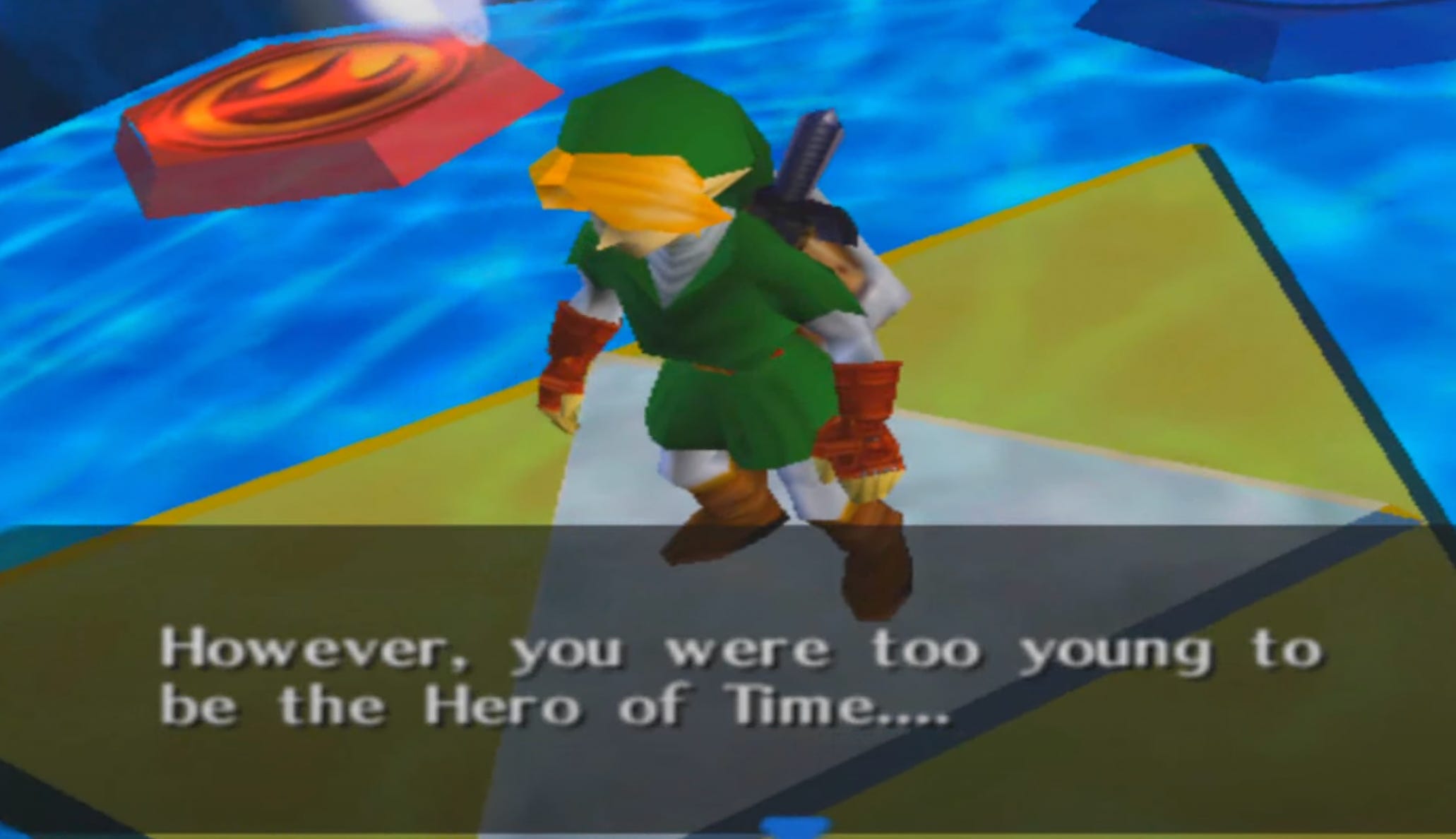
But obviously to anyone who has played the game, the clearest example of Link’s evolution of capacity comes with his leap from age 10 to 17 while sealed within the Sacred Realm inside the Temple of Time. As Rauru the sage explains, while Link was worthy of the title of “Hero of Time”, he was too young, implying a lack of strength or capacity necessary to carry out the task.
Each of these points has reiterated the same basic proposition: Link was underdeveloped or unequipped to handle the burden of responsibility that had been handed to him, but through time and active experience he was able to acquire the means to grow into the task at hand.
One could rightly point out that there’s a missing ingredient here to accurately relate this to penance. Penance is unique as a concept and while a loose parallel can be drawn from growth in general (such as the development of a particular skill through practice), penance carries with it the implication of a firm destination. It suggests that the character in question is being conformed to a mold that is definitive and preordained. In the case of Dante in Purgatorio, his will is being conformed to the image of God from which he will only desire that which is holy. But Ocarina of Time does offer a transcendent target by which we can measure growth. Link’s definitive metric for conformity is the Triforce of Courage.
The Triforce of Courage
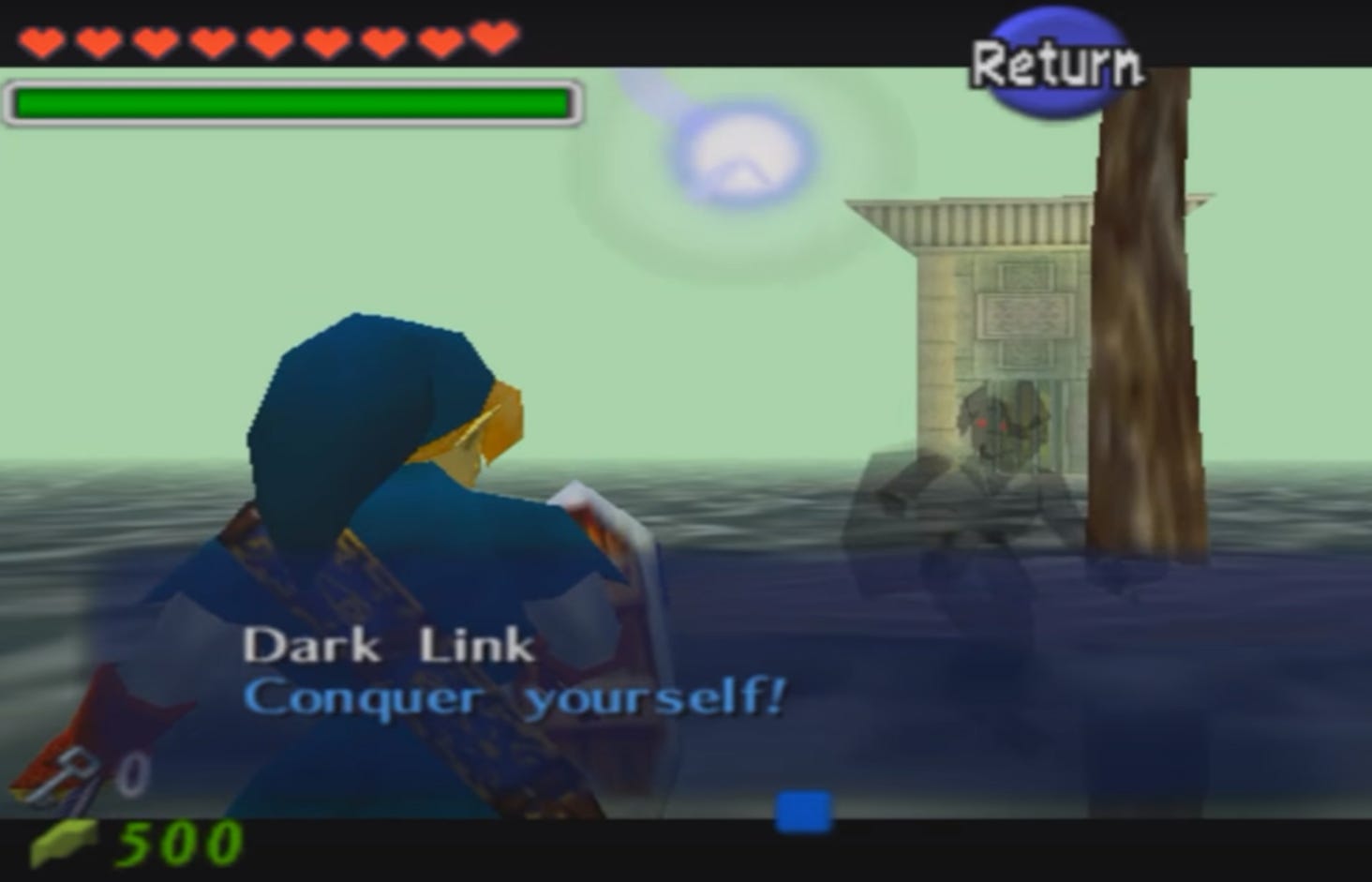
Although the details of the Triforce of Courage are not well expounded in Ocarina of Time, there are hints in this game as well as others that wielding the whole or a shard of the Triforce is possible only if the bearer is worthy (a la Mjolnir and the Mighty Thor). This is demonstrated more forcefully in the relatively panned Zelda II: The Adventure of Link. But the best implicit demonstration within Ocarina of Time comes within the Water Temple when Link faces off against his own shadowy mirror-self.
The clear imagery of a dark self that must be conquered is as visceral a reference to ones own moral formation as can be found in literature or myth. Given other brief details about the Triforce, such as its shattering upon being seized by Ganondorf when Link opens the door to the Sacred Realm due to his unworthiness to hold 2 of its 3 parts, we can assume that Link is worthy of the reception of the shard but in need of refinement of courage and character to properly wield it.
The substance of Link’s journey is one of formation towards alignment with the Triforce itself. And at its end, the surrender of the power he gained.
In order to cut this essay short, I won’t go into greater detail with parallels to Herakles, which are probably self-evident after expounding to this length. Suffice to say that Link, while lacking a heinous crime for which he pays penalty, undergoes tasks (feats of strength and daring) as a means of his self-formation and correction of character.
And although he seems a passive protagonist to the player, a closer examination of context presents a character undergoing penance and reconciling to a higher good.
These essays on Art, Myth and Comicking are my own meandering musings. If you like this sort of thing, I’ll be posting such essays every other week. The next is on Nihilism in the Office v. Parks and Rec.
J. Holt's Newsletter of Illustration and Myth is a reader-supported publication. To receive new posts and support my work, consider becoming a free or paid subscriber.
Sorry for the absence. It may require some explanation. I’m well aware that consistency is crucial in online presence, but I got caught in the weeds.
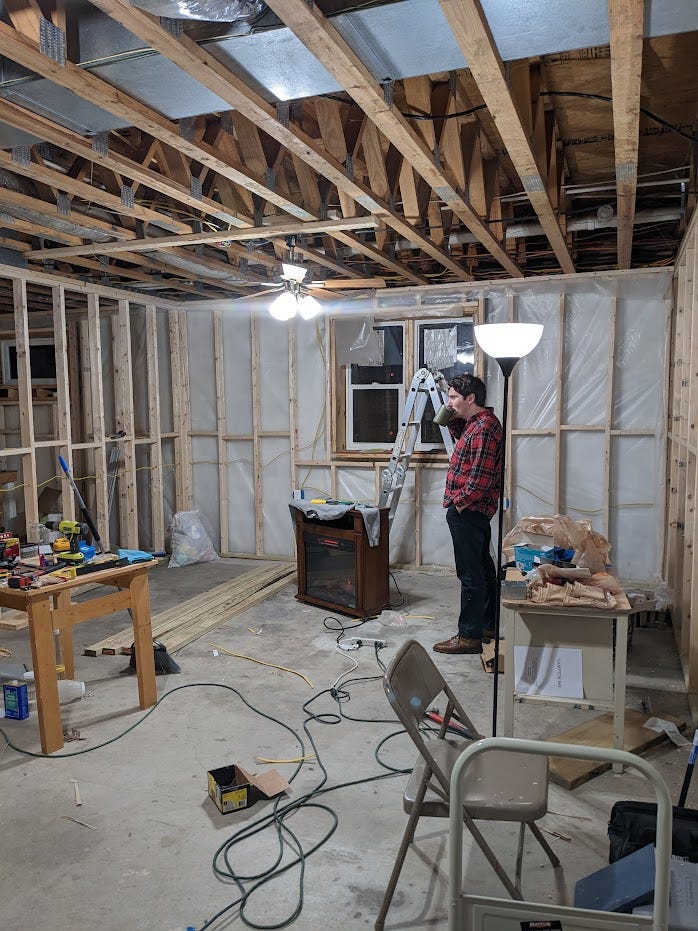
Our fourth child was incoming, and I had to do some construction work to prepare new bedroom space (which is not done, but the bulk of the hard labor is done). Here I am drinking coffee while trying to remember what I learned from Youtube about running electrical.
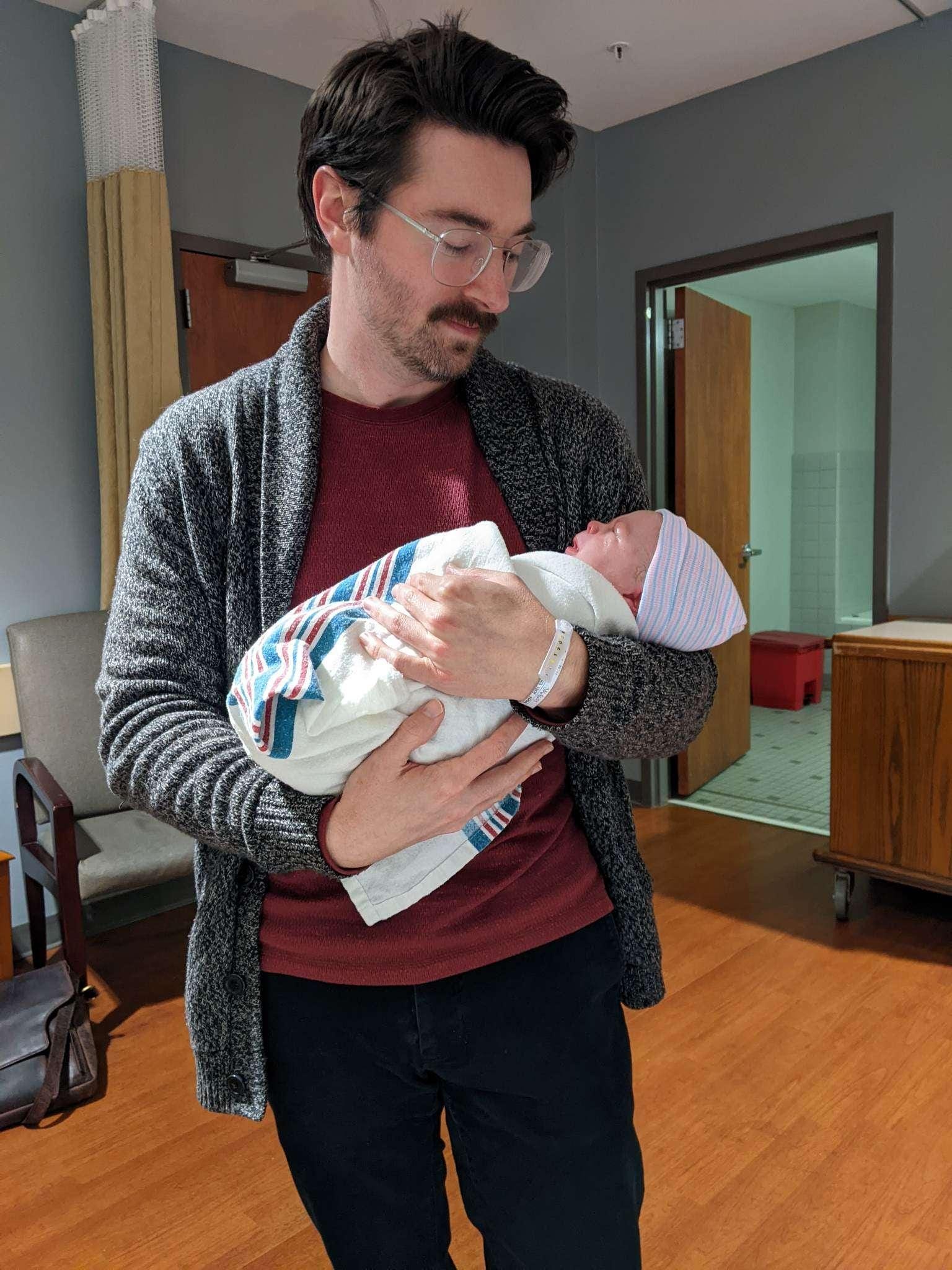
Also my son arrived this weekend.
So even though I’ve been steadily posting on schedule at theseuscomic.com. I need to get back up to date with Substack and stay there. For one reason: I really like Substack. This is a cool site with a lot of useful features.
But let’s get to the pages I’ve missed posting (which is quite a bit).
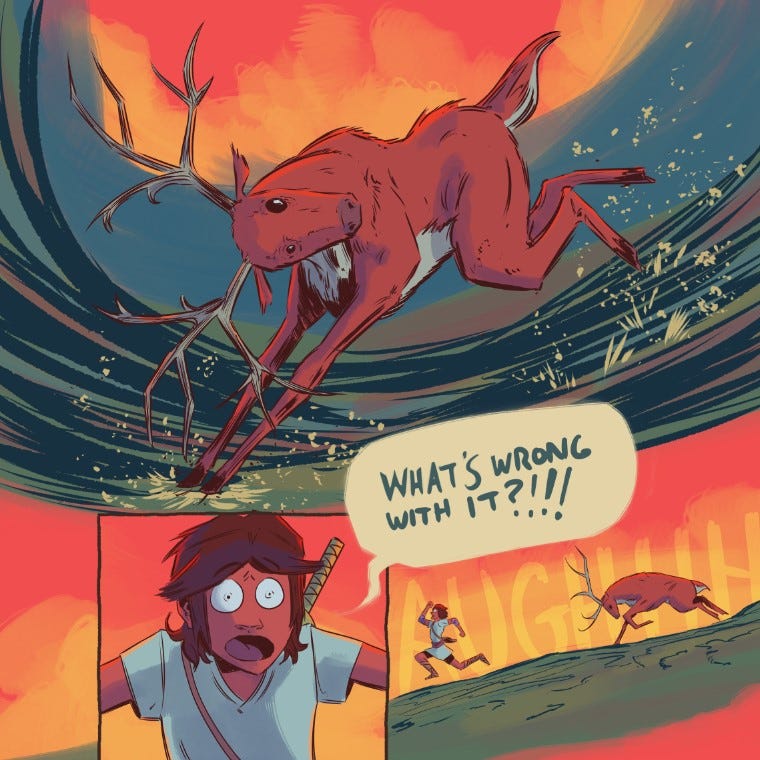
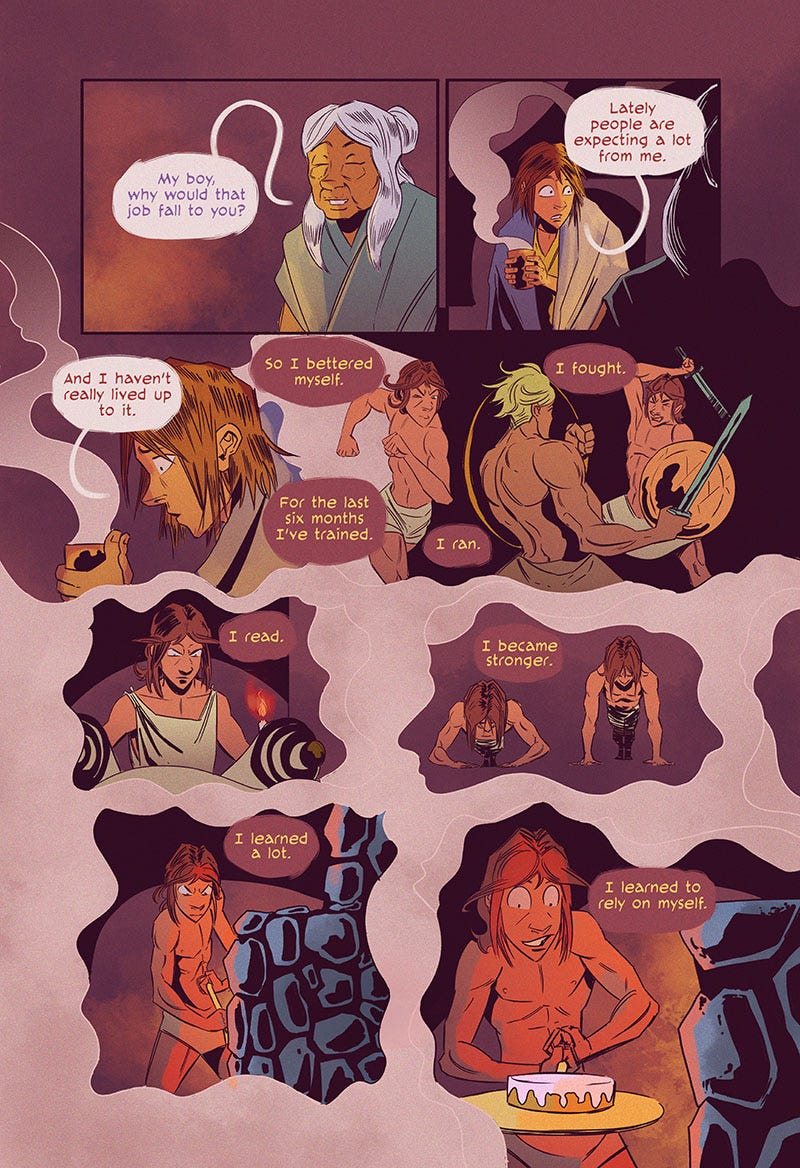
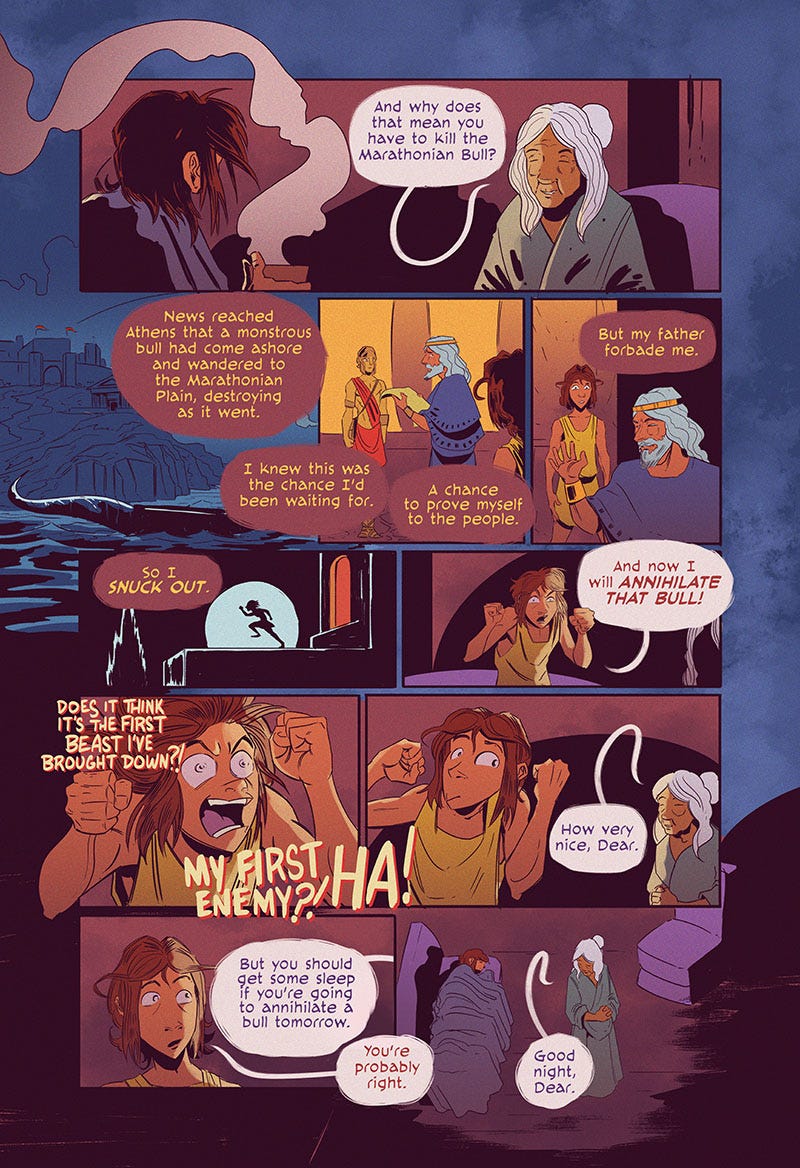
Theseus Pages 240-52
Theseus Books Update
Theseus Vol. 2 copies have arrived in the US and should be incoming in the next few days. Now I have to cut this email short because I took up all the allowable space with those 12 pages. Next email in 2 weeks, when books should be in hand!